Inventory Definitions
Basic Definitions
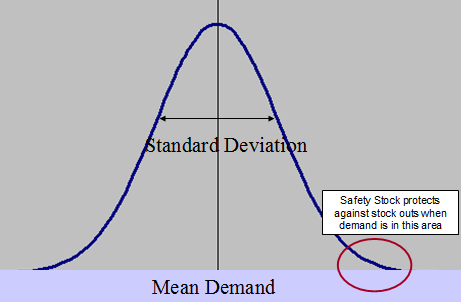
Standard Deviation
Used to quantify the amount of variation of a set of data values from its mean.
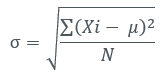
Where,\ σ = Standard Deviation\ Xi = Data observations\ µ = Mean of Xi observations\ N = Number of observations if number of observations is > 30, Else It is N-1
Forecast Error
Difference between the Actual demand observed and the forecast.\ Actual Demand - Forecast
Forecast Accuracy
Measure of how close the Actual Demand is to the forecasted quantity.
Forecast Accuracy = 1 – Forecast Error. Forecast Error needs to be expressed as a relative measure for this.
If Forecast Error > 1, then Forecast Accuracy = 0.
Average Daily Shipments

ABC Analysis
Also called a Pareto analysis or the 80/20 rule, it categorizes Items into different types depending on value and use.
Demand Variability
Change in demand from period to period and is the measurement of how much variability can occur in the demand from customers.
Lead Time Demand
Total demand between now and the anticipated time for the delivery after the next one if a reorder is made now to replenish the inventory.
Normal Distribution
Most popular distribution model for determining probability and works well in predicting demand variability based upon historical data. Here demand volume is assumed to be normally distributed.
Sensitivity Analysis
A sensitivity analysis is a technique used to determine how different values of an independent variable impact a particular dependent variable under a given set of assumptions. In the application, you can define the Lead time step, forecast error step and Number of steps. The process of recalculating outcomes under alternative assumptions to determine the impact of variable under sensitivity analysis can be useful for range of purposes.
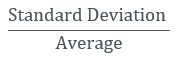
Co-efficient of Variation
GR Time
Time needed for the material to complete the quality inspection to move to the storage (obtained from ERP).
UOM (Unit of Measure)
Standard unit or system of units by means of which a quantity is accounted for.
Inputs
Lead Time
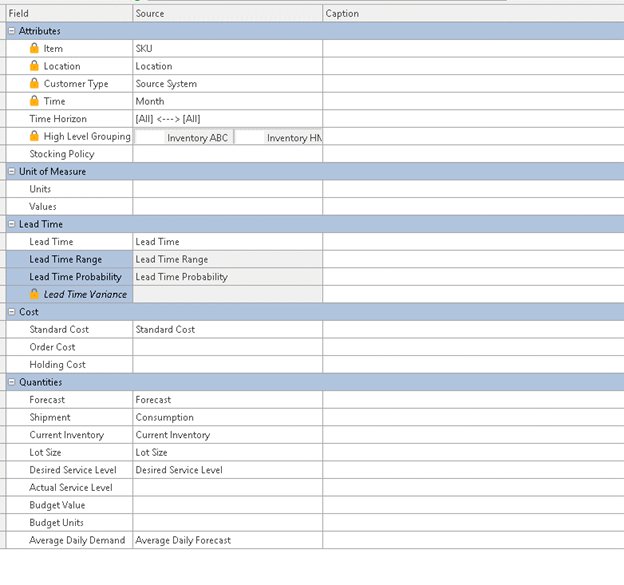
Lead Time
Amount of time required for an item to be available for use from the time it is ordered. This is normally mean of Lead Times captured over last few months.
Lead Time Range
Range of all the captured lead times for a combination. For example, if there are lead times captured in last 6 months, then Lead Time Range will be Max (Lead Time) – Min (Lead Time).
Lead Time Probability
It is the probability that says lead time is within the range given.
Lead Time Variance
Expectation of the squared deviation of a Lead Time observation from its mean.

This is calculated in Arkieva Inventory Planner
Cost
Standard Cost
Inventory costing method used in manufacturing environments that uses the materials costs in the bill of materials combined with the labor costs and machine costs in the routing to calculate the cost of the finished or semi-finished item (from ERP).
Order Cost
The costs associated with the ordering of new batch of raw materials or Procured Finished goods.
Holding Cost
The amount of money a company spends to keep inventory safe and stored over a certain length of time (obtained from ERP).
Fixed Cost
The cost of total expenses that do not change for a certain period without directly relating to the production or sales amount of the product (obtained from ERP).
Inventory Cost
Refers to Holding Cost.
Quantities
Usage
This is the combination of both internal and external Demand. Internal Demand will include Internal Consumptions, STOs, Internal Movements. External Demand will involve Shipments to other companies or customers.
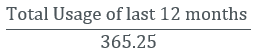
Average Daily Usage
Forecast
Last 12 months usage forecast captured at the Item – Location level on monthly basis.
Shipment
Last 12 months Usage captured at the Item – Location level on monthly basis.
Current Inventory
Inventory Captured during the last reporting time.
Lot Size
Also, known as order quantity, represents the quantity of an item you order for delivery on a specific time.
Desired Service Level
Expected probability of not hitting a stock-out during the next replenishment cycle, and thus, it is also the probability of not losing sales. The cycle duration is implicitly the lead time. The service level can also be defined as the probability of being able to service the customers’ demand ever facing any backorder or lost sale.
While a 100% service level might - i.e. service all customers all the time - appear desirable, it is usually not a feasible option.
Average Daily Demand
It is the daily average of the forecast.
Demand Variance
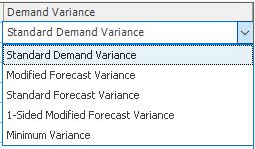
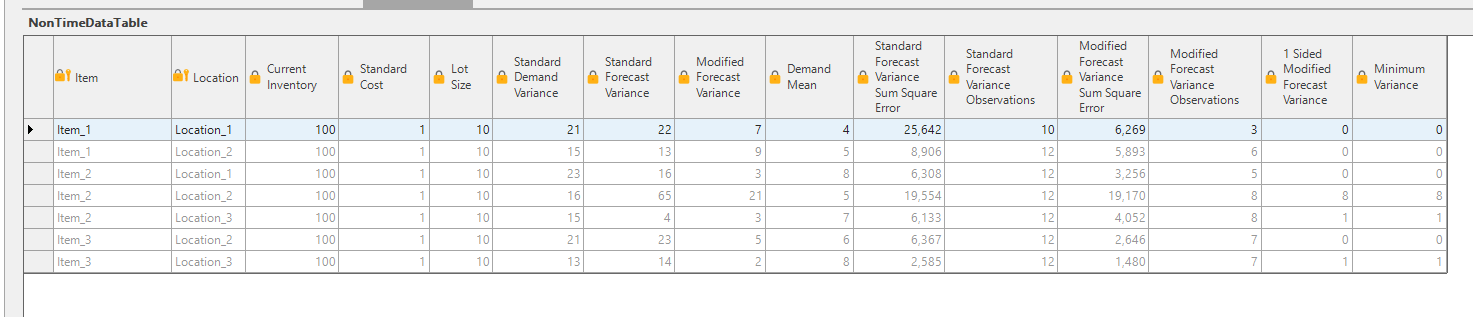
Minimum Variance
This method takes the minimum of variances calculated by all the other methods.
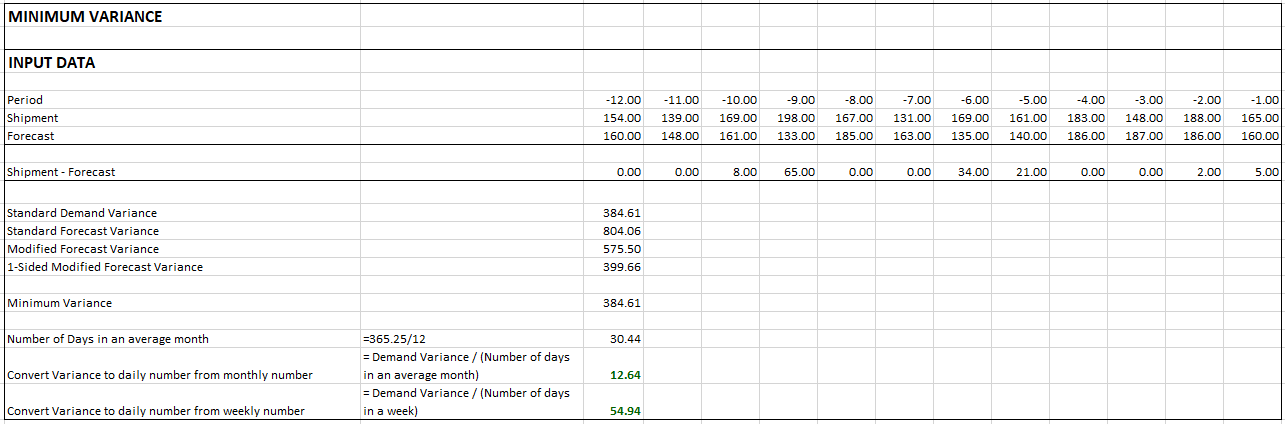
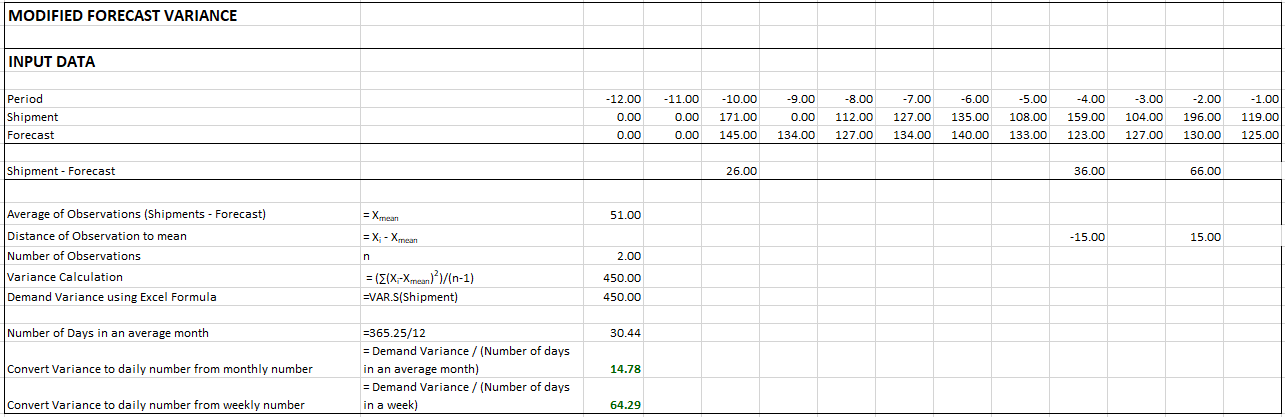
Modified Forecast Variance
This is square of the standard deviation of those historical observations where Actual usage are more than the Usage Forecast.
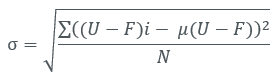
Where,\ σ = Standard Deviation\ (U-F)i = Observation where Actual Usage > Usage Forecast\ μ(U-F) = Mean of (U-F)i observations\ N = Number of observations if number of observations is > 30, Else It is N-1
Modified Forecast Variance = σ^2
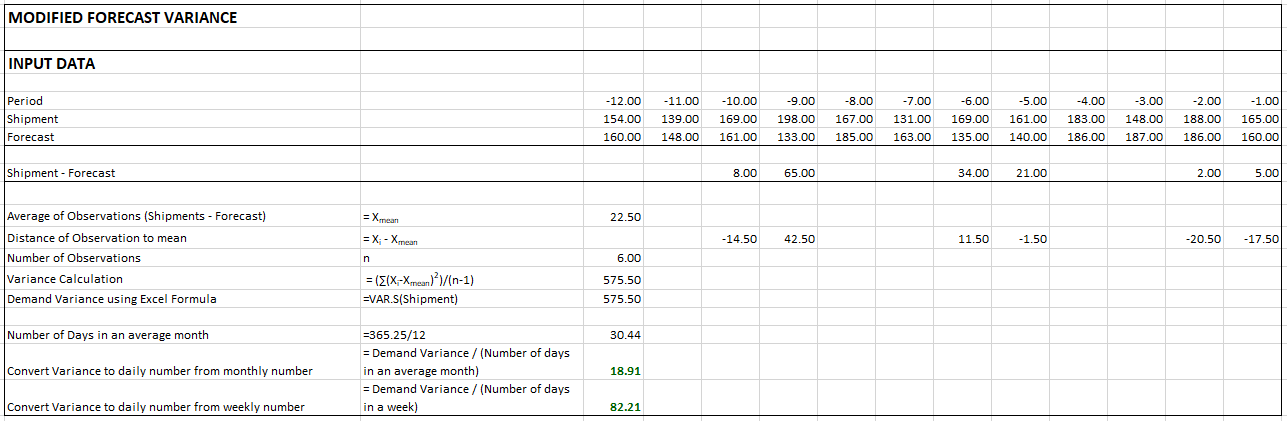
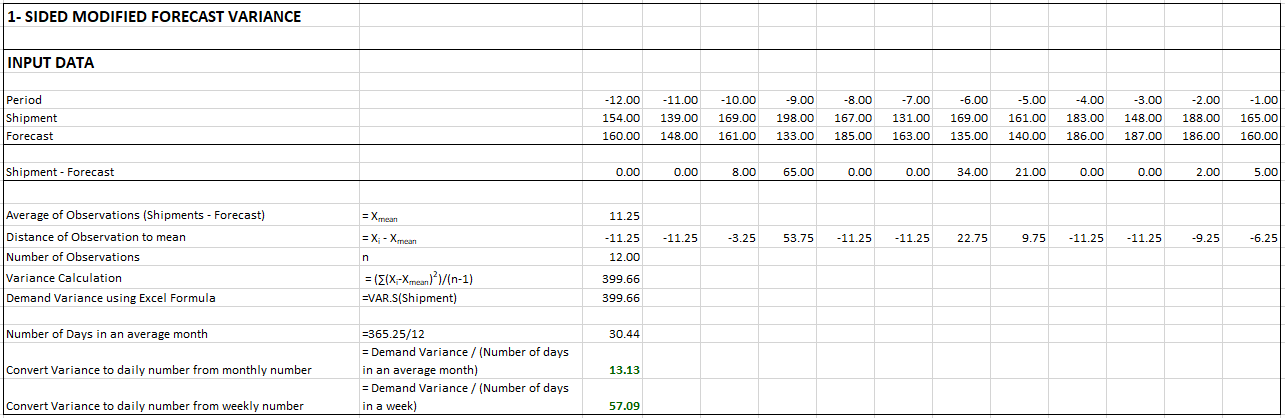
1-sided Modified Forecast Variance
If shipment \< forecast, then replace the number with 0; this means variance is calculated over the same as original number of values, with some values artificially changed to 0. You can see how this is different by trying the SQL queries provided here.
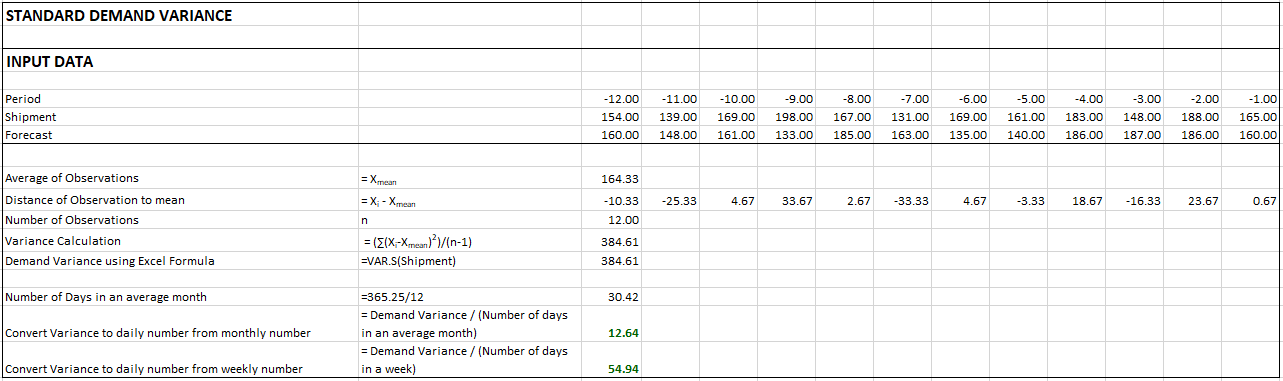
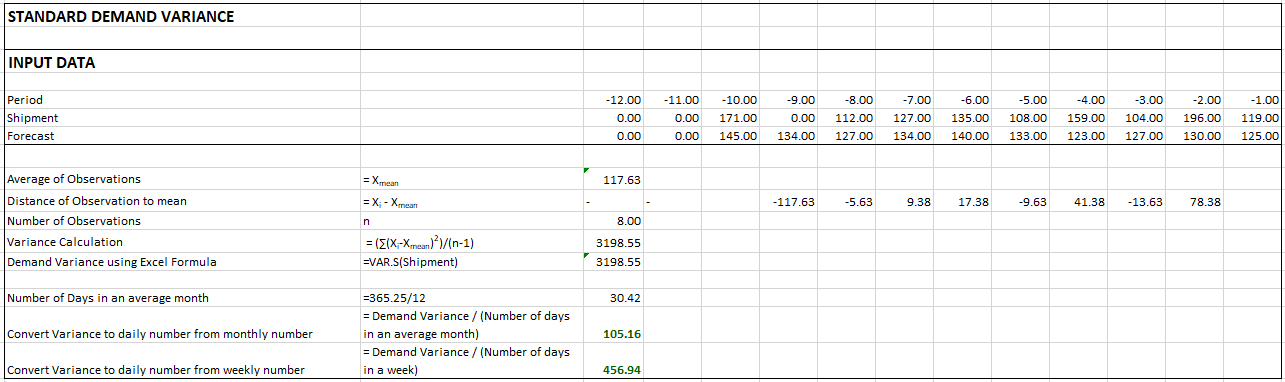
Standard Demand Variance
This is square of the standard deviation of Historical Usage.
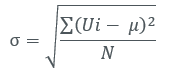
Where,\ σ = Standard Deviation\ Ui = Historical usage observations\ µ = Mean of Ui observations\ N = Number of observations if number of observations is > 30, Else It is N-1
Standard Demand Variance = σ^2
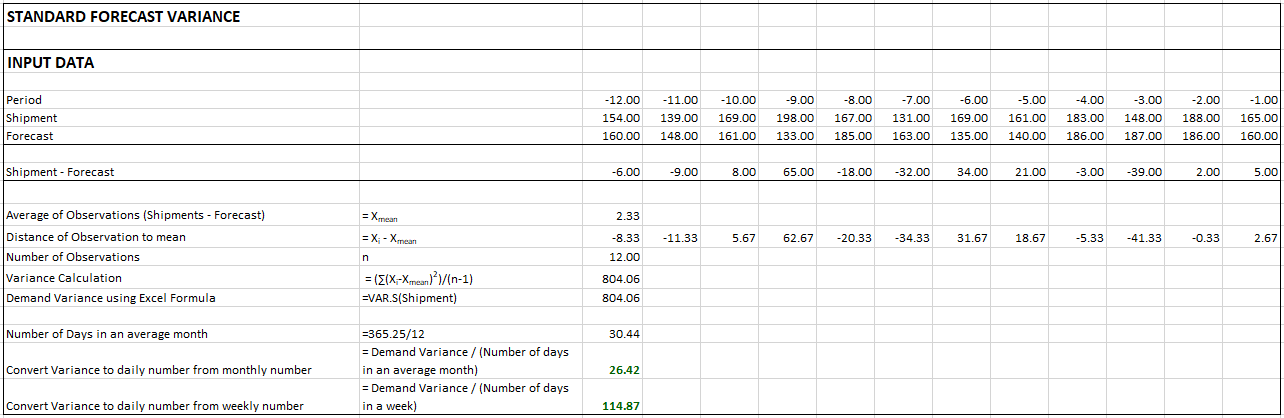
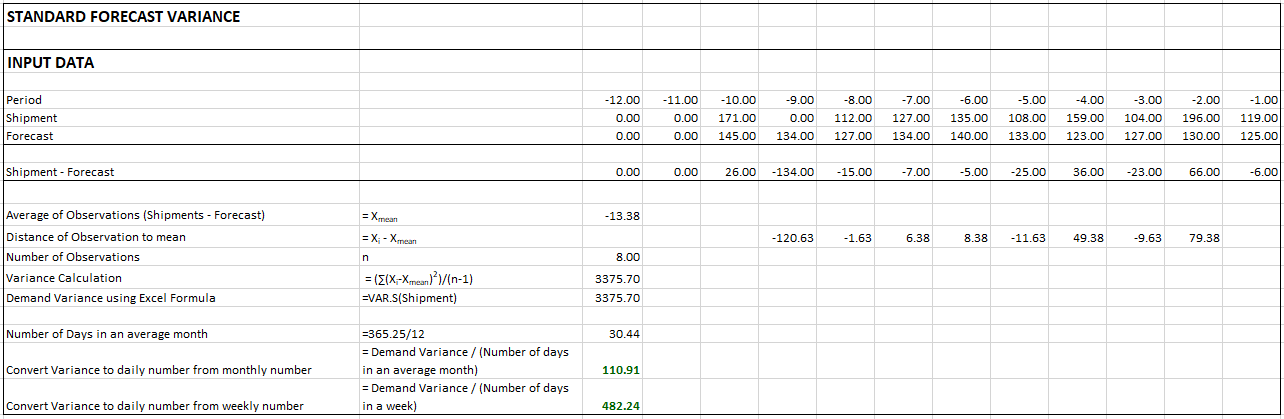
Standard Forecast Variance
This is square of the standard deviation of Historical Forecast Usage.
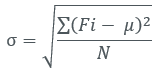
Where,\ σ = Standard Deviation\ Fi = Historical Forecast usage observations\ µ = Mean of Fi observations\ N = Number of observations if number of observations is > 30, Else It is N-1
Standard Forecast Variance = σ^2
Safety Stock Definition

Where,\ z is the Normal function coefficient for a given Desired Service Level.\ μL is the expected value of lead time, which is assumed to be the mean lead time.\ σd^2 is the Variance of Demand error about the mean\ μd is the expected value of demand, which is assumed to be the mean demand.\ σL^2 is the Variance around its mean
The first term covers the demand during mean lead time. The second term covers for the lead time variability.
Safety Stock Methods
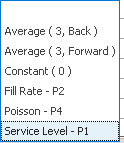
Average (3, Back)
Safety Stock is fixed as the last 3 periods average usage for the Item Location combination.
Average (3, Forward)
Safety Stock is fixed as the future 3 periods average Forecast for the Item Location combination.
Constant (0)
Safety Stock is fixed as 0.
Fill Rate Service Level (P2)
While calculating Safety Stock, service level (Z) is considered based on the Fill Rate of the order and not actual quantity in the order. So, it is percentage of demand that is met on time.\ Ex: 1000 T ordered/year, SL = 98%, 980 T must be delivered on time, 20 T may be late (could be merely 1 ton short for 20 orders out of a total of 100 orders; P1 SL achieved would then only be 80%, while the P2 SL would be 98%).\ Fill Rate = (Yearly Demand - Units Short per Year) / (Yearly Demand).
Poisson Distribution (P4)
Discrete probability distribution that expresses the probability of a given number of events occurring in a fixed interval of time. The Poisson distribution is typically used to define a reorder-point rather than a safety stock.
Service Level (P1)
While calculating Safety Stock, service level (Z) is considered based on the actual quantity in the order.
Model Out Put
Safety Stock (Units)
Protection against natural variations in demand and/or supply.
Safety Stock Value
Safety Stock Units * Standard Cost.
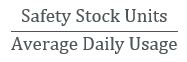
Safety Stock Days
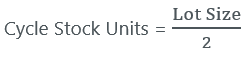
Cycle Stock Units
Demand during production cycle.
Cycle Stock Value
Cycle Stock Units * Standard Cost.
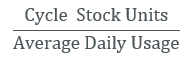
Cycle Stock Days
Target Stock Units
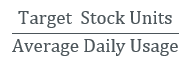
The amount of inventory required to meet all demand.\ Target Stock = Safety Stock Units+ Cycle Stock.
Target Stock Value
Target Stock Units * Standard Cost.
Target Stock Days
Reorder Point Units
Safety Stock + Demand During Lead Time.
WHERE Demand During Lead Time = Average Daily Usage * Lead time (days).
Inventory Variables
Current Stock Units
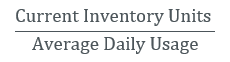
Amount of Inventory volume available at that moment.
Current Stock Value
Current Stock Value = Current Stock Units * Standard Cost.
Current Stock Days
Unrestricted Quantity
The quantity that can be used for planning without reservations depending on the industry or business.
Obsolete Stock
Inventory Items rendered unusable or diminished in value.
Stock Transfer Order (STO)
Orders that facilitate movement of inventory from one location to Another.
In Transit Quantity
Total number of stock-keeping units (SKUs) that are currently being shipped from one location to another (obtained from ERP).
Stock Order
The order which is necessary to produce items in advance before receiving an order from a customer after determining the customer's specifications based on the demand forecast.
Blocked Quantity
Inventory that is blocked from further usage.
Quality Inspection Quantity
Inventory quantity that is being blocked for Quality inspection.
Cost of Goods Sold (COGS)
Cost of goods sold (COGS) refers to the direct costs of producing the goods sold by a company. This amount includes the cost of the materials and labor directly used to create the good. It excludes indirect expenses, such as distribution costs and sales force costs.
COGS = Beginning Inventory + Purchases During the Period – Ending Inventory
Days of Supply (DOS)
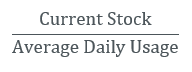
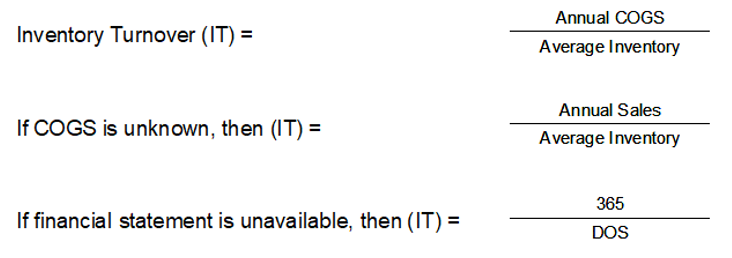
Inventory Turns
The number of times inventory is consumed or sold during a one-year period. There are different ways this can be calculated.
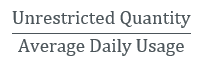
Days of Inventory

Days of Coverage
Stocking Policy
Written instructions from the top management on the level and location of inventory to be held by a firm. E.g. MTS, MTO.
SKU (Stock Keeping Unit)
Refers to a specific item in a specific unit of measure.
Economic Order Quantity
The number of units that a company should add to inventory with each order to minimize the total costs of inventory - such as holding costs, order costs, and shortage costs.

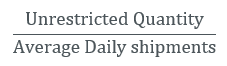
Shipments Coverage
Amount of days where shipments are covered by unrestricted inventory quantity.
Total RL Time
Total period of time that elapses from the moment it is determined that the product should be reordered until the product is back on the shelf available for use. It is obtained from ERP.
Ways of Calculating Variances
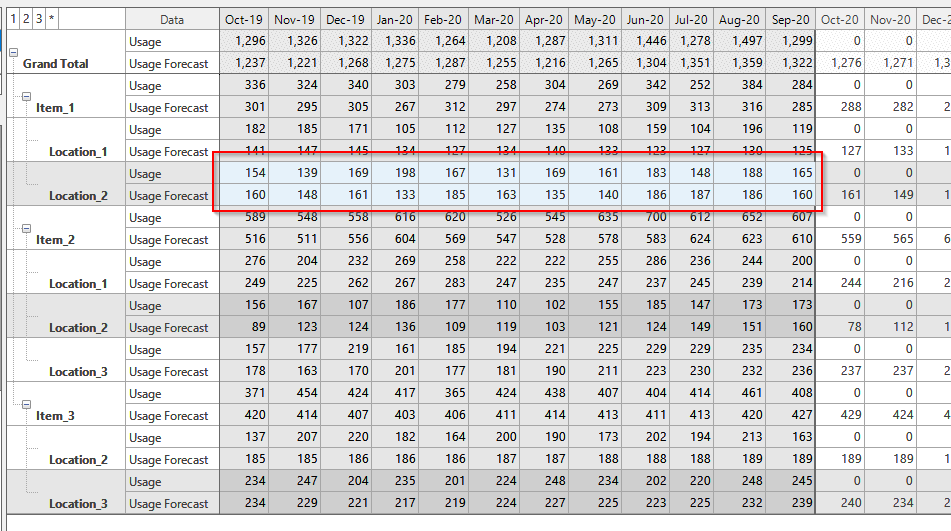
Mean Variance Calculation

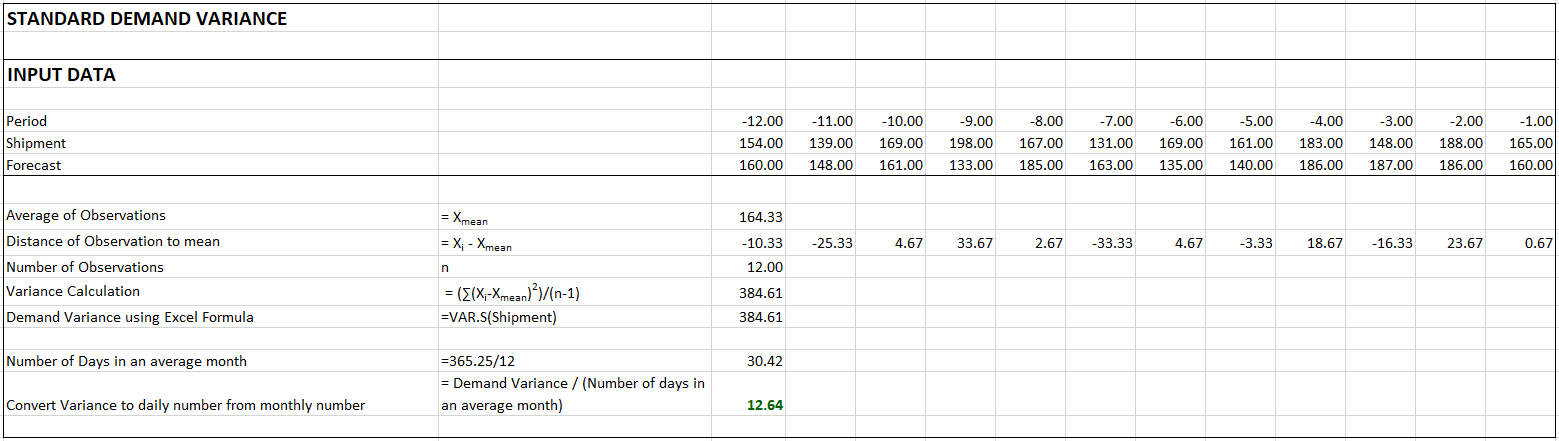
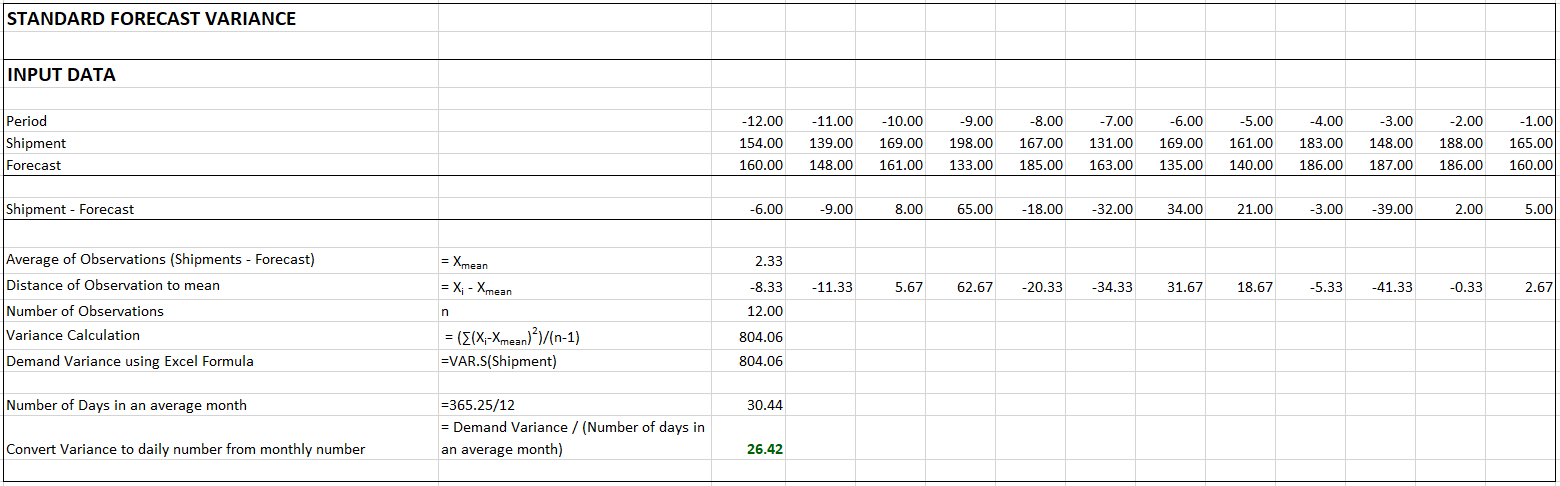
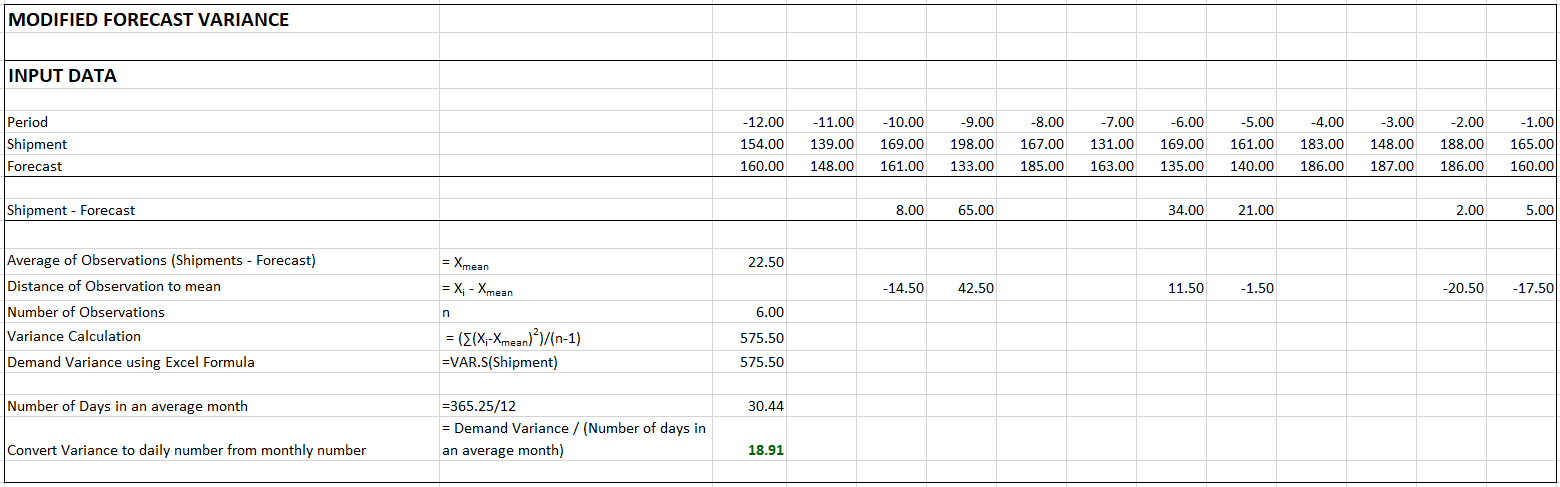
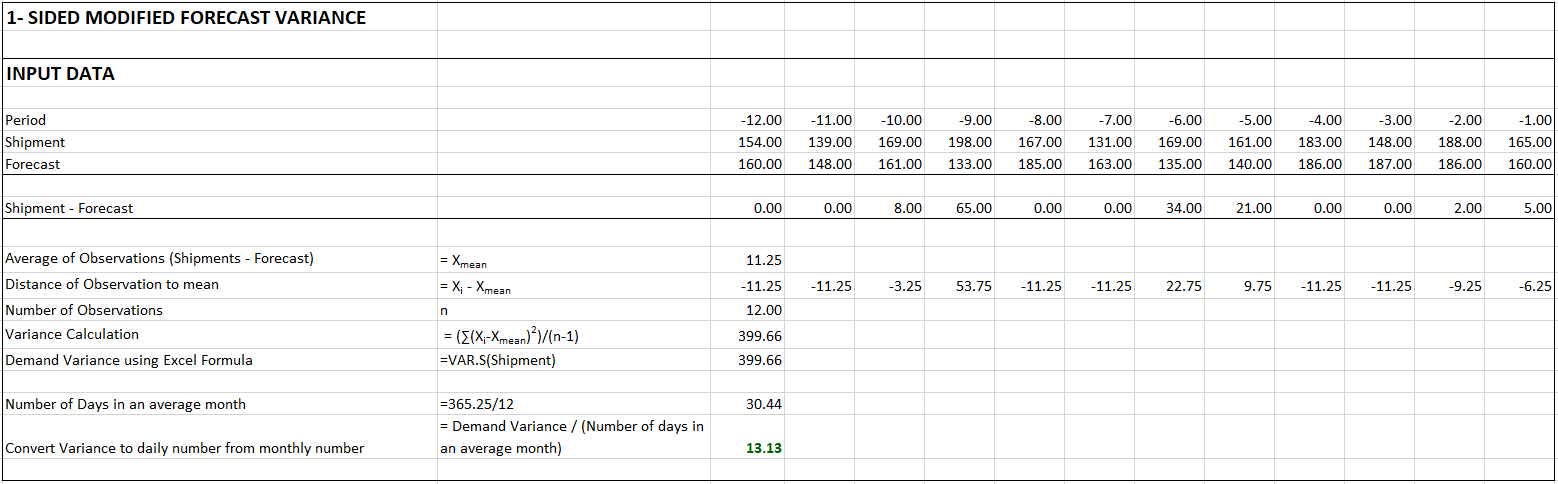
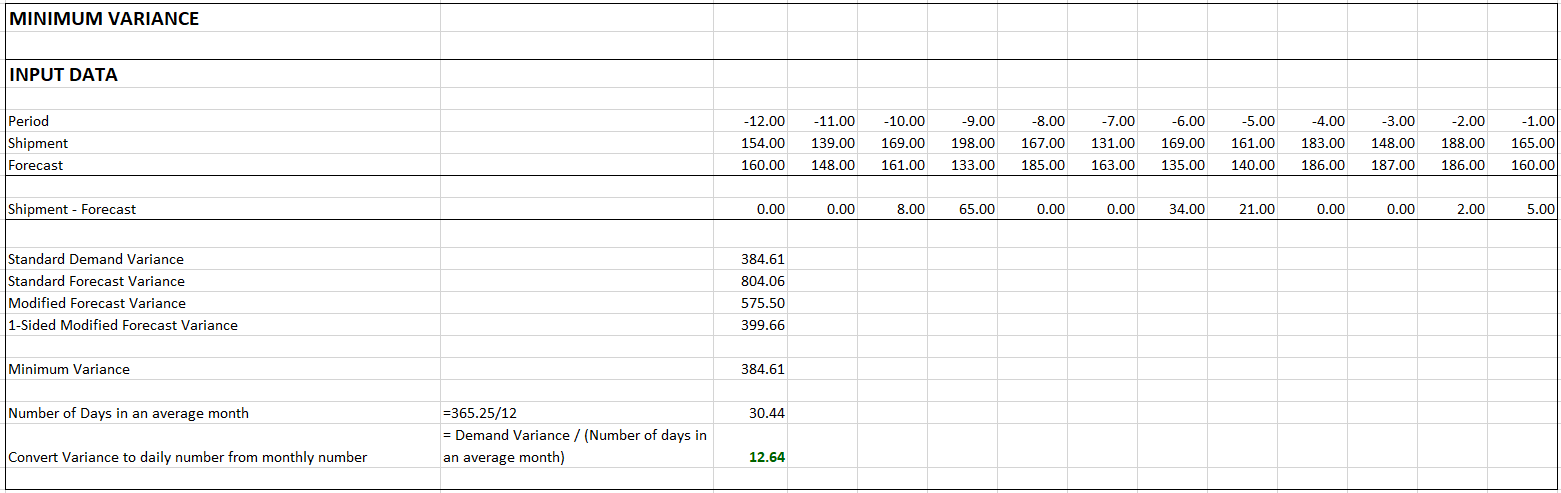
Matches results in the IP document Input Data
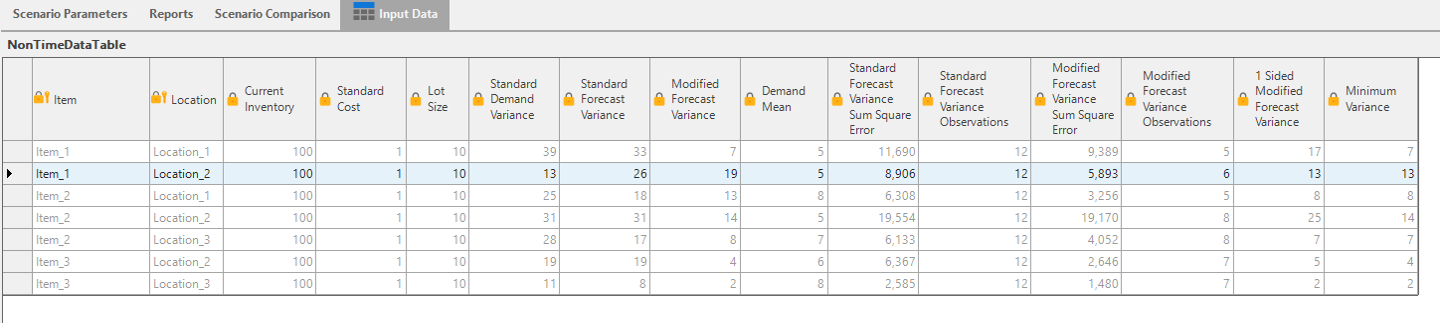
Median Variance Calculation

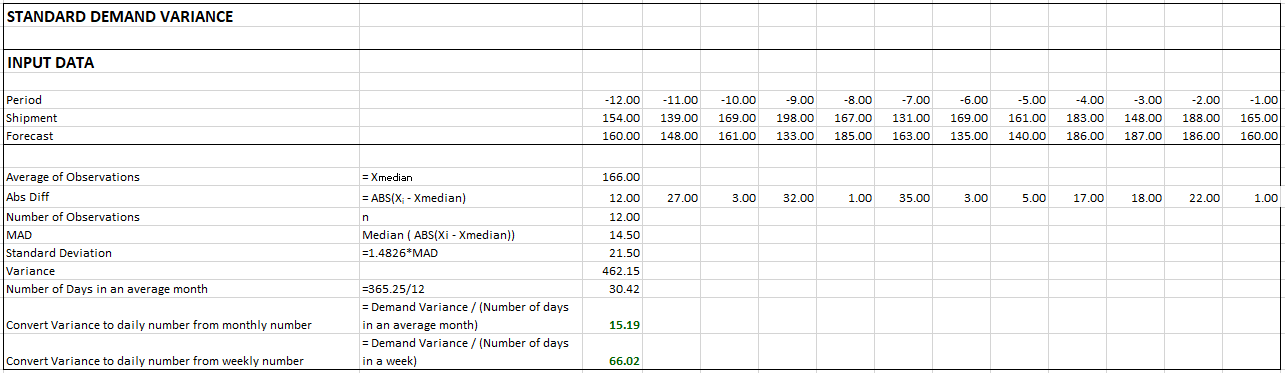
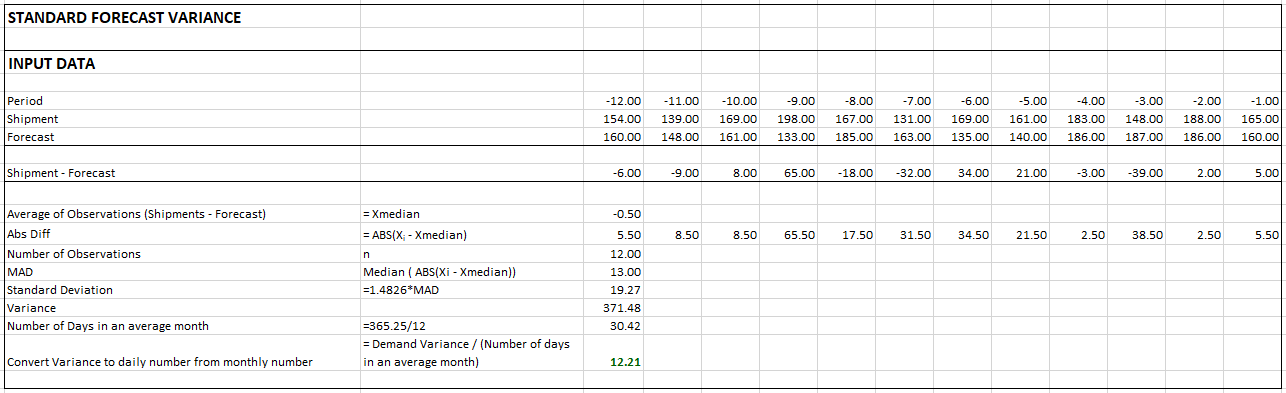
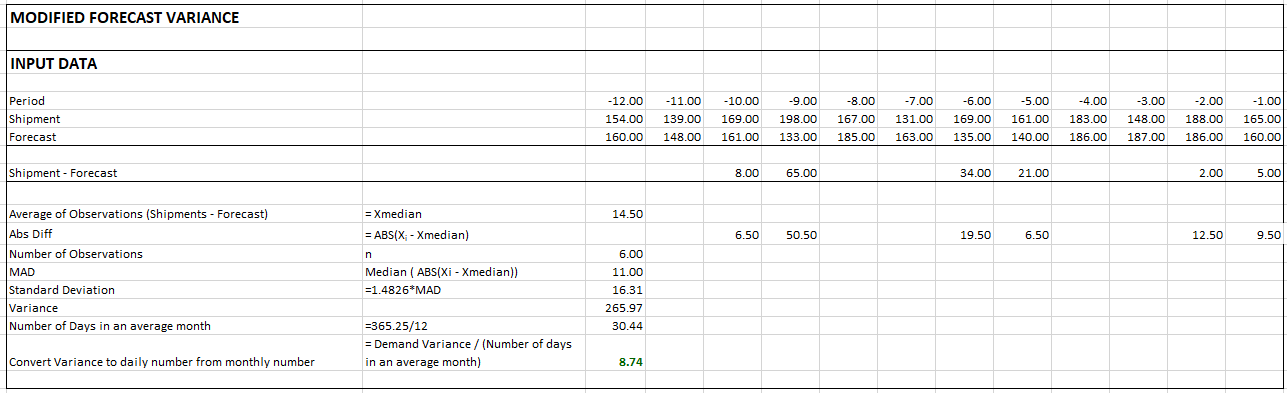
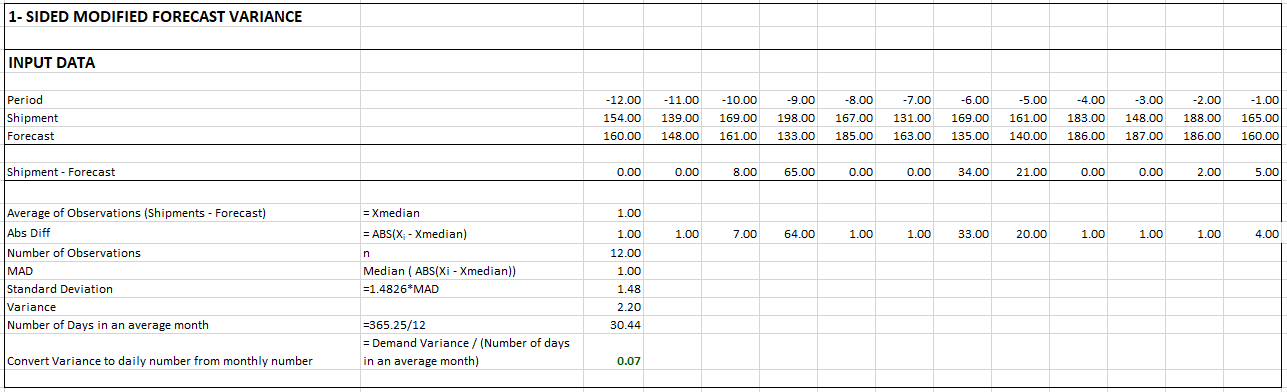
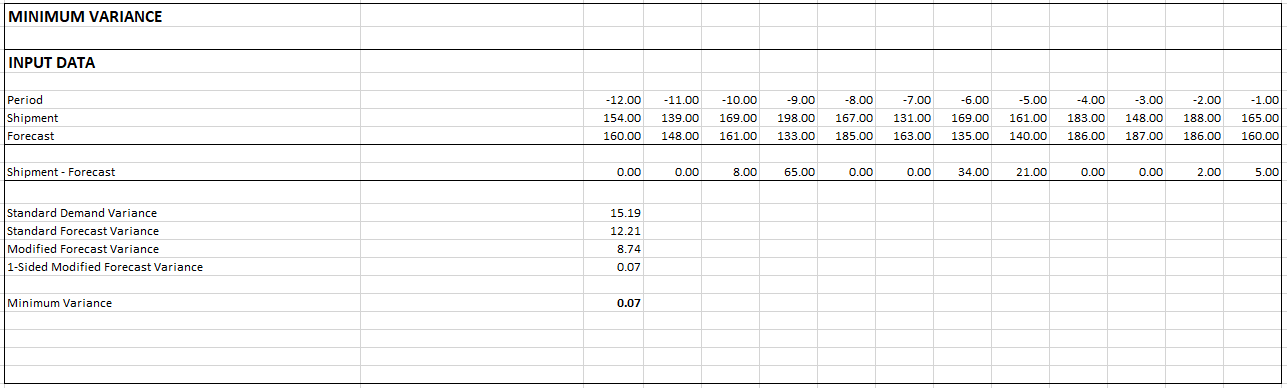
Match results in the IP document Input Data:
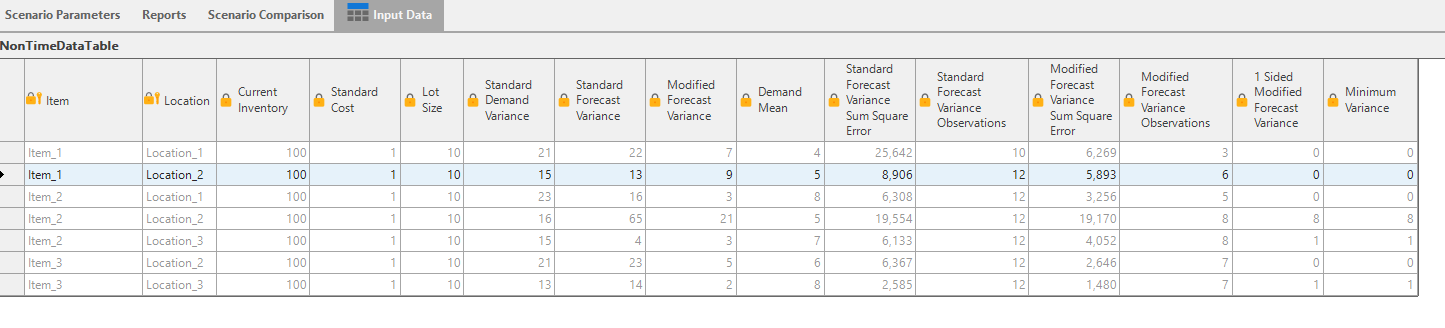
Mean Variance Calculation plus Trim
- Trim =10%
- Since 12 time periods, 1st and last observations are ignored.

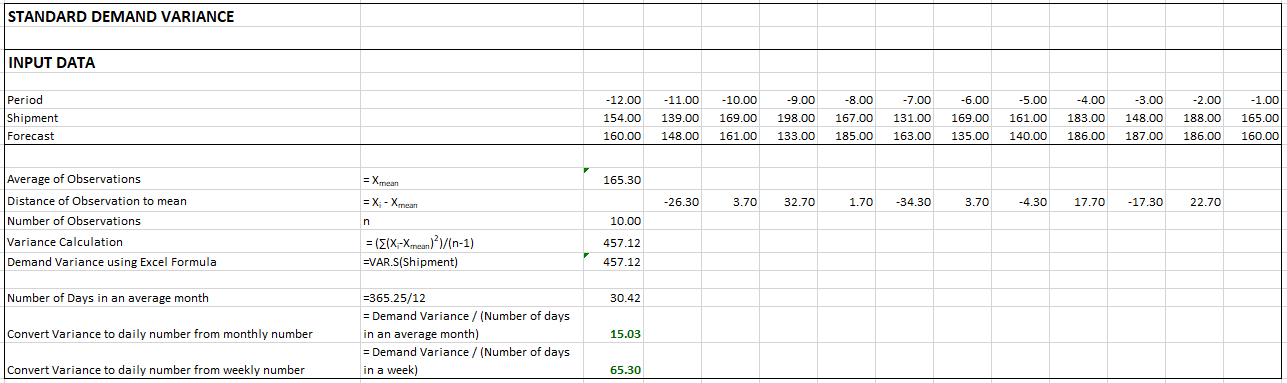
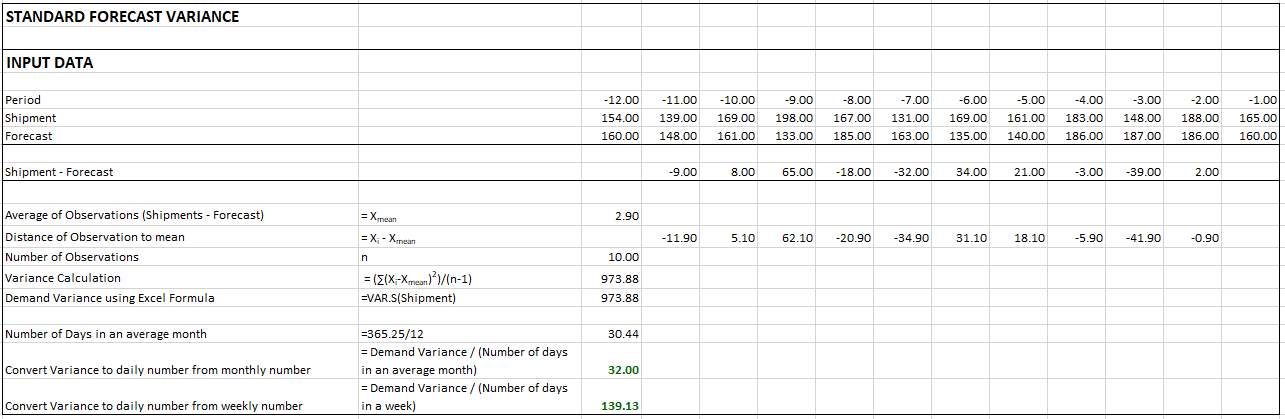
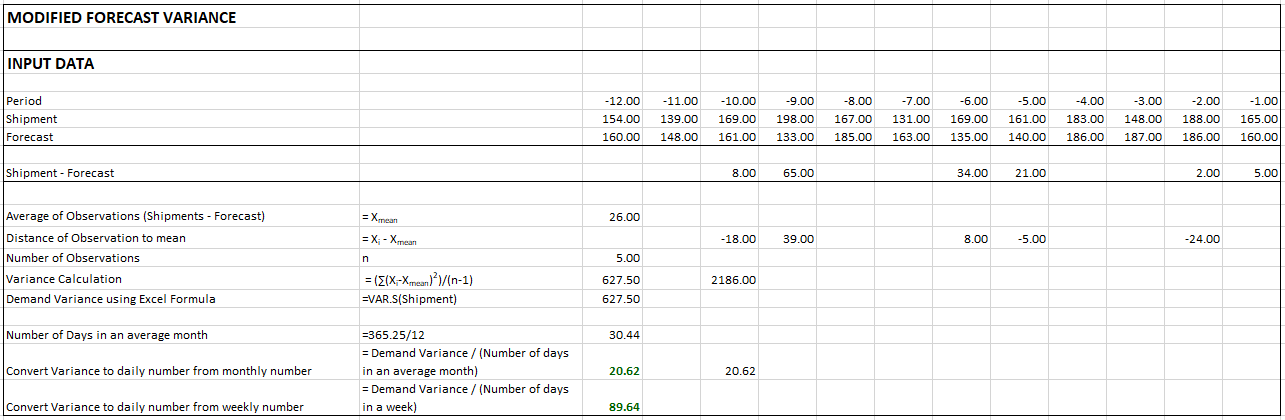
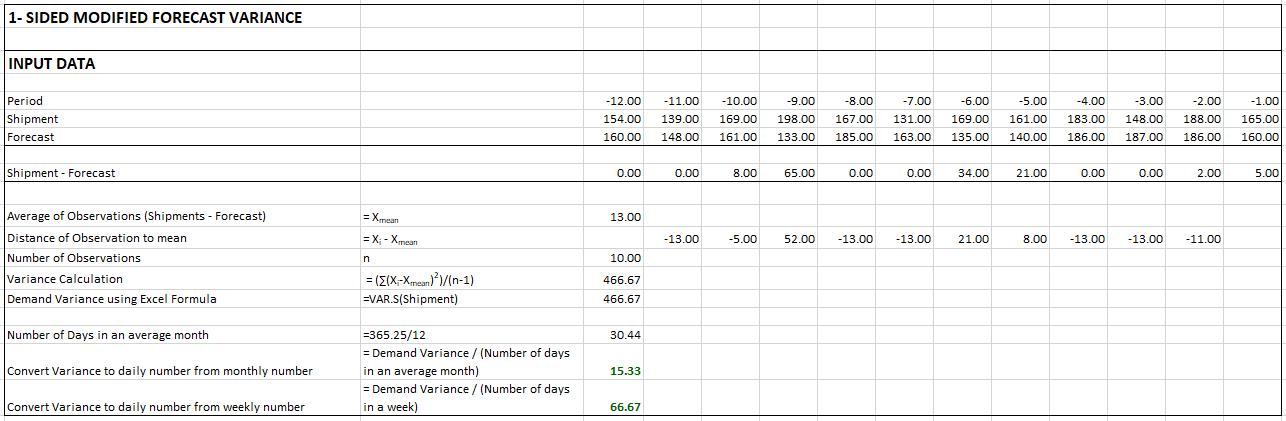
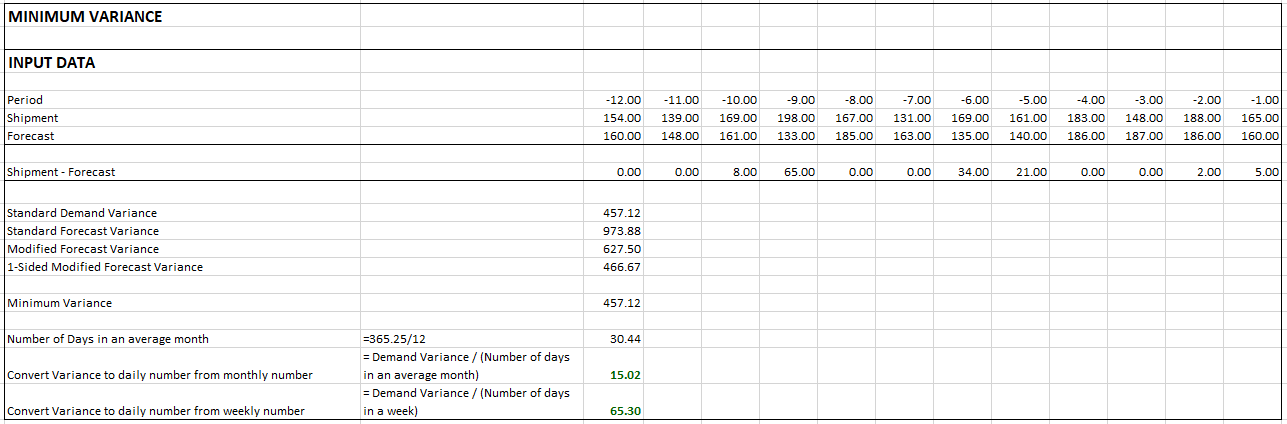
Matches results in the IP document Input Data:
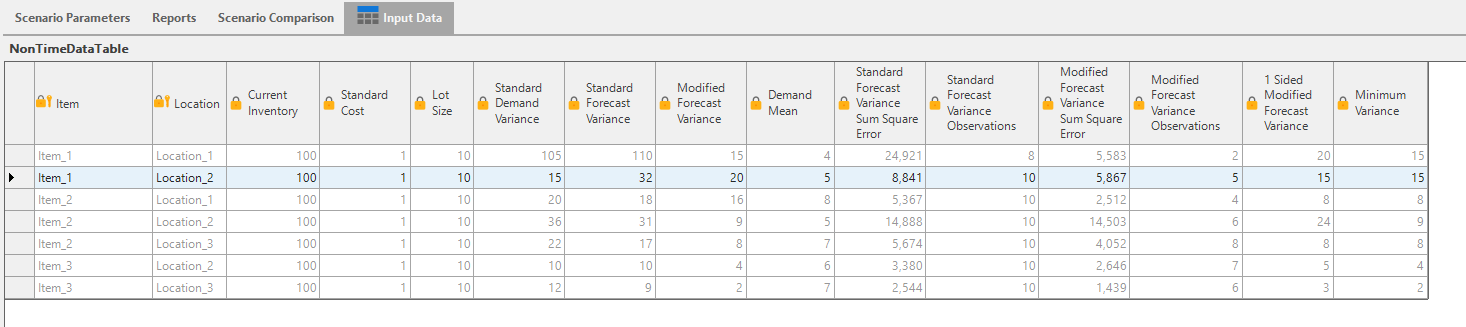
Median Variance Calculation plus Trim
- Trim = 10%
- Since 12 time periods, 1st and last observations are ignored.

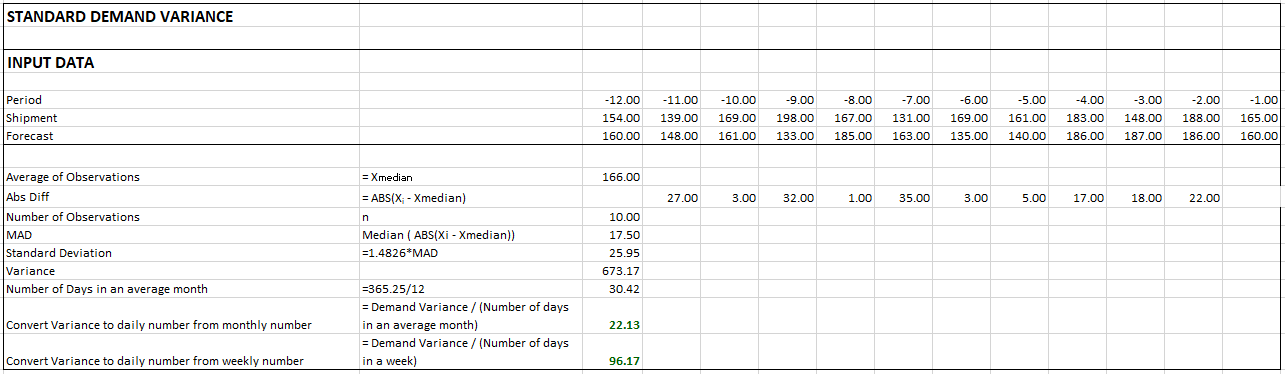
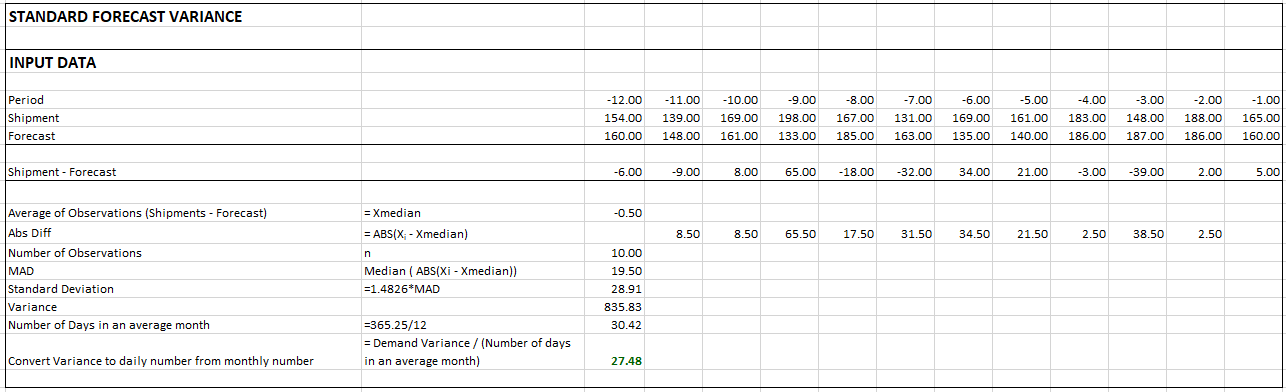
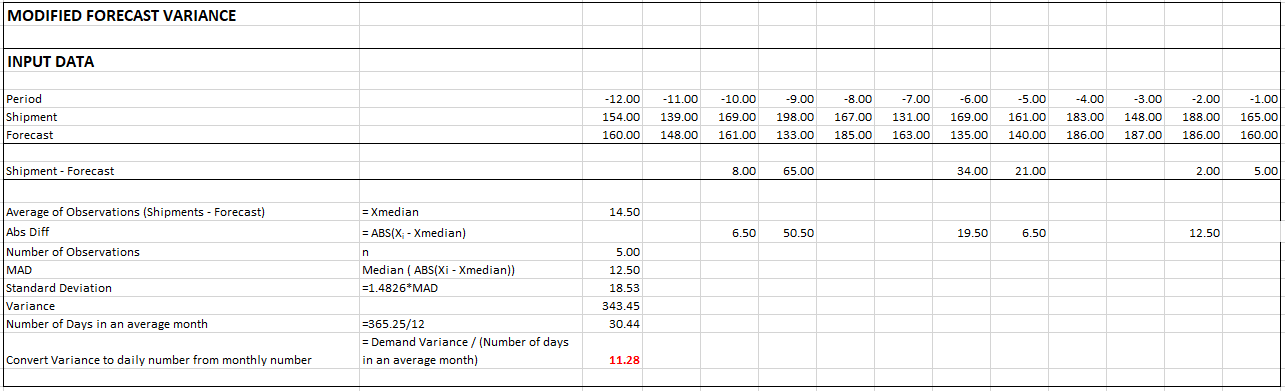
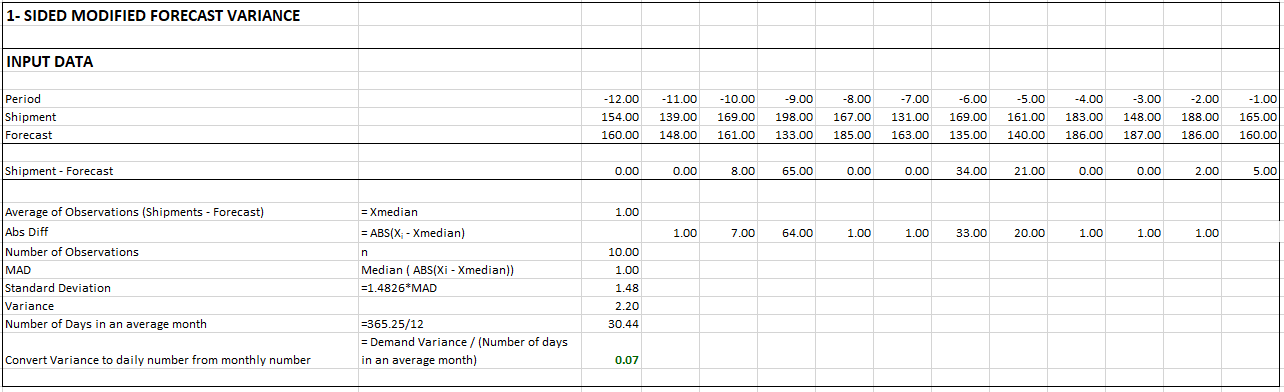
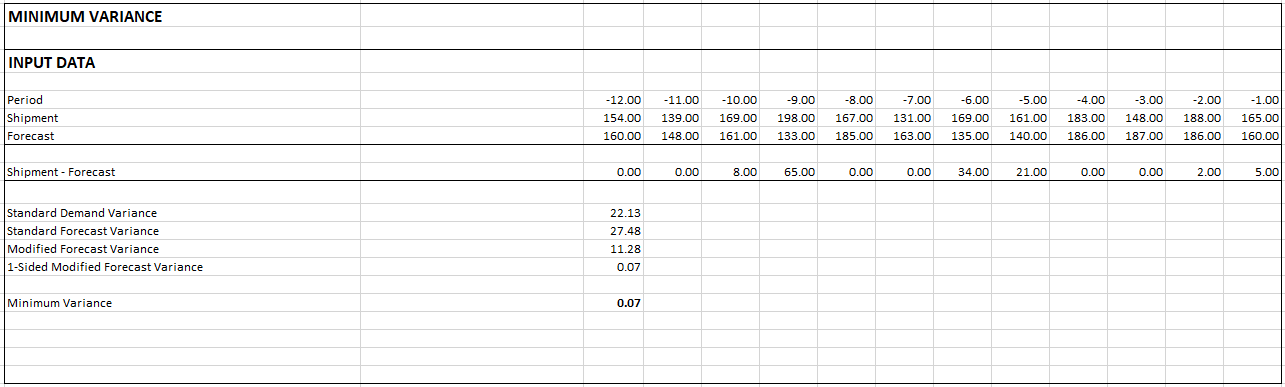
Match results in the IP document Input Data:
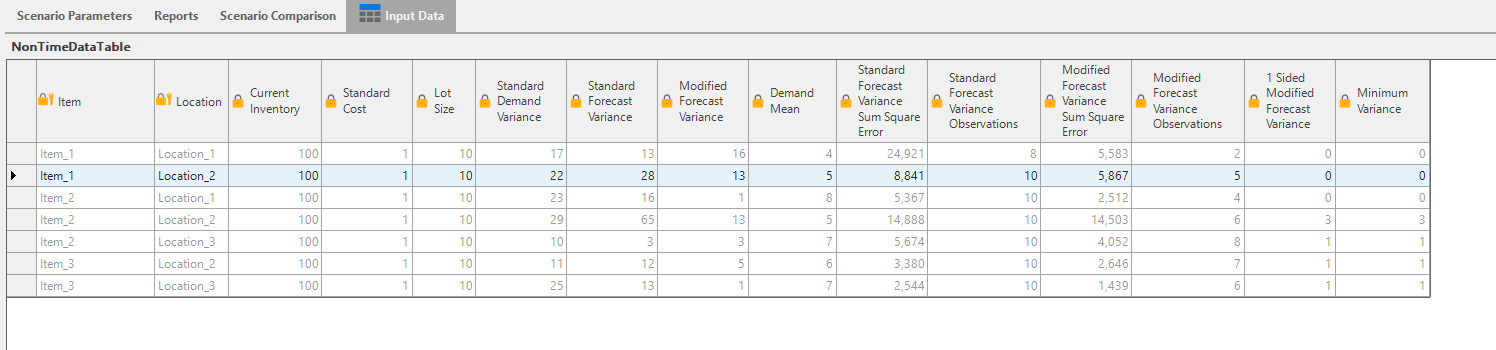
Variance Calculation with Lead 0 Mean
Ignore Leading 0 combinations Defined in table : InventoryOptimizationInputDataConfig_XXXX

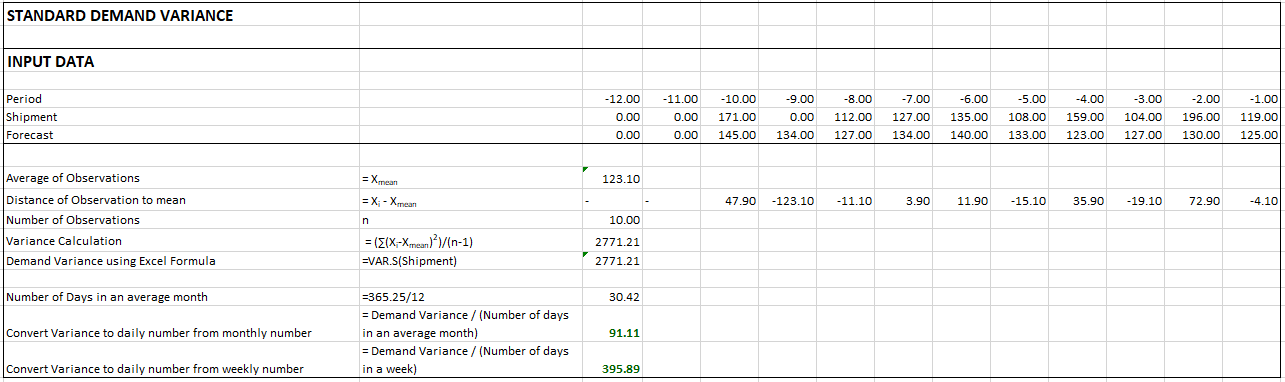
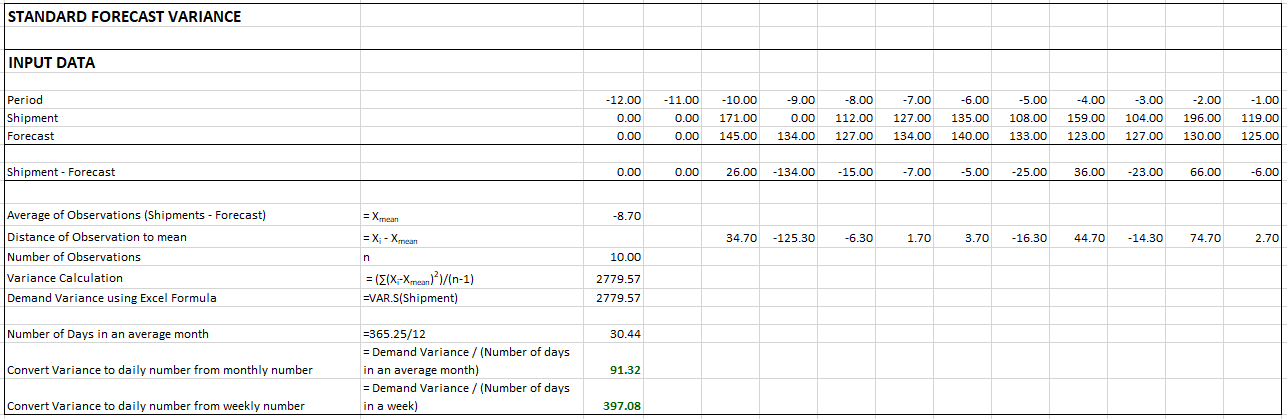
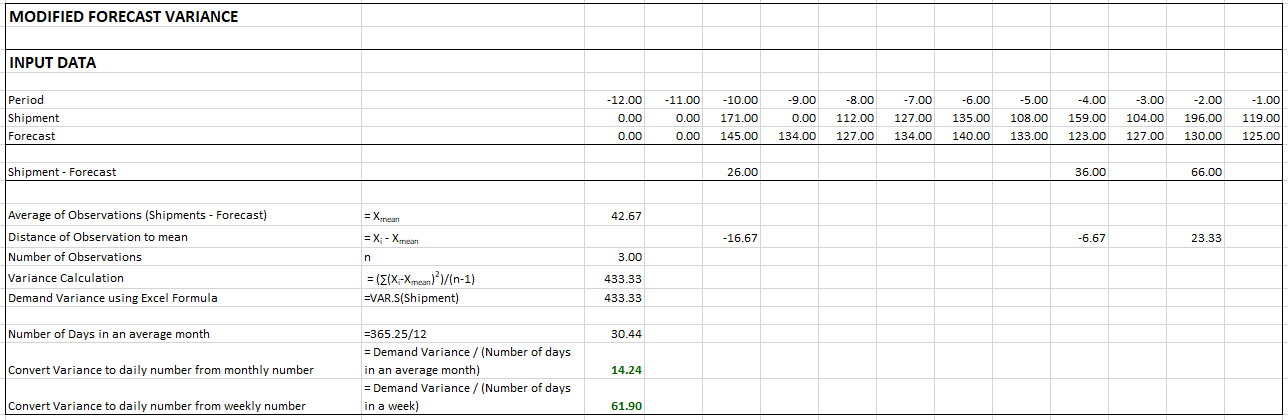
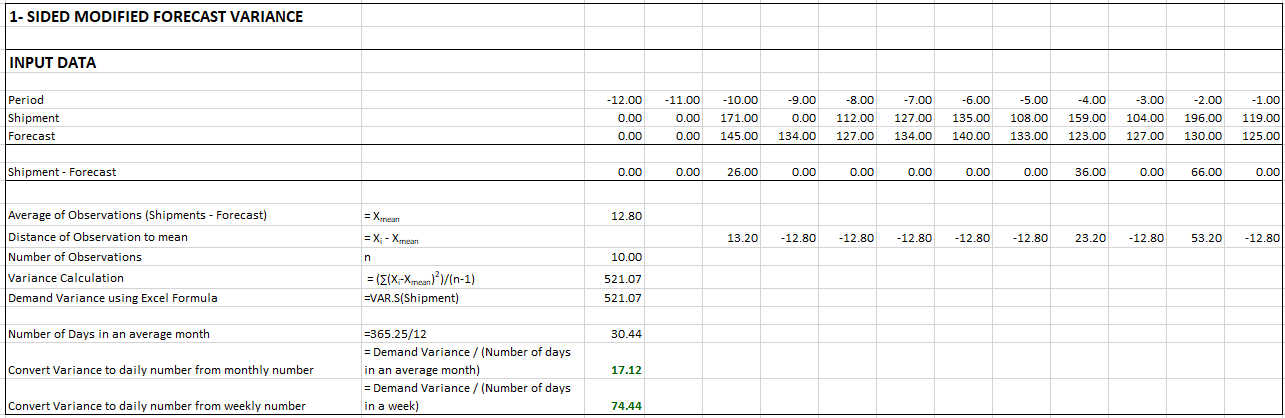
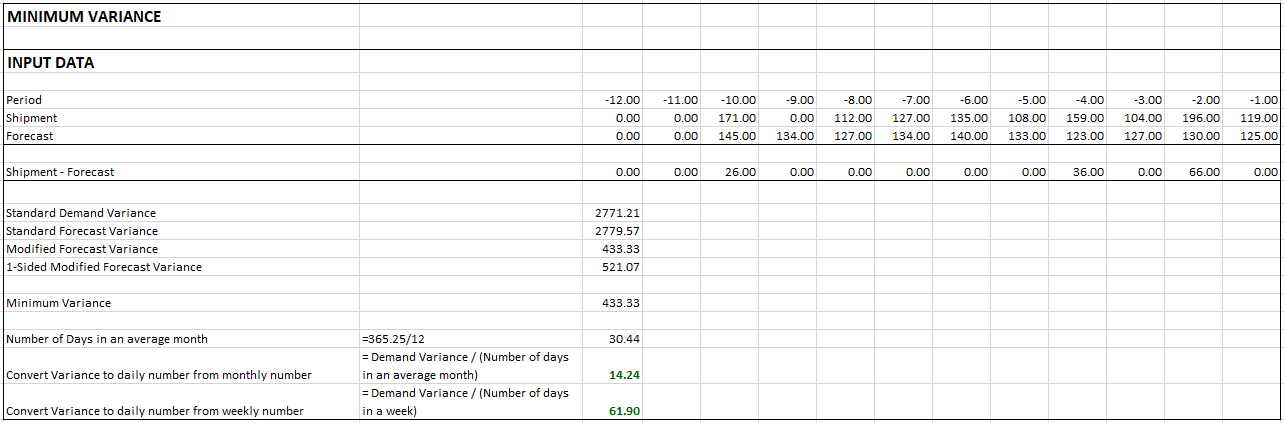
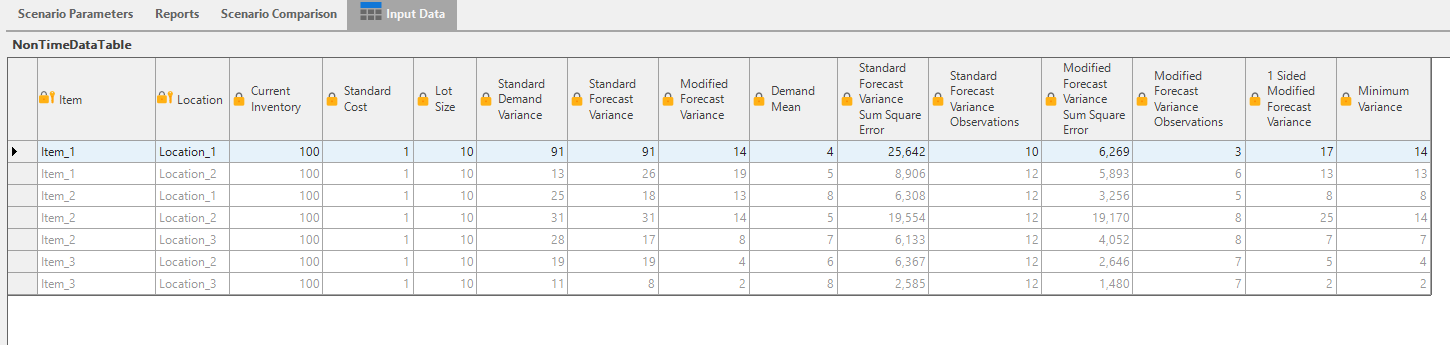
Matches results in the IP document Input Data:
Variance Calculation with Lead 0 plus Median
Ignore Leading 0 combinations Defined in table : InventoryOptimizationInputDataConfig_XXXX

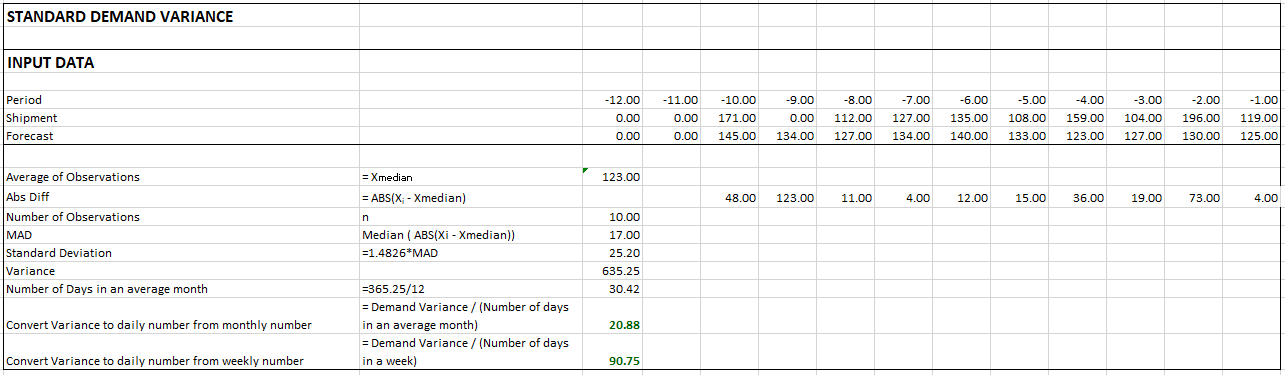
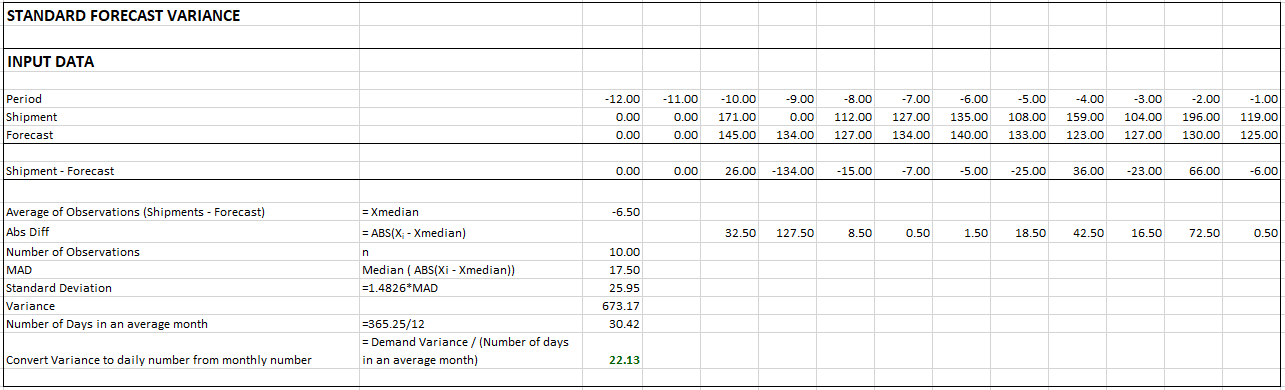
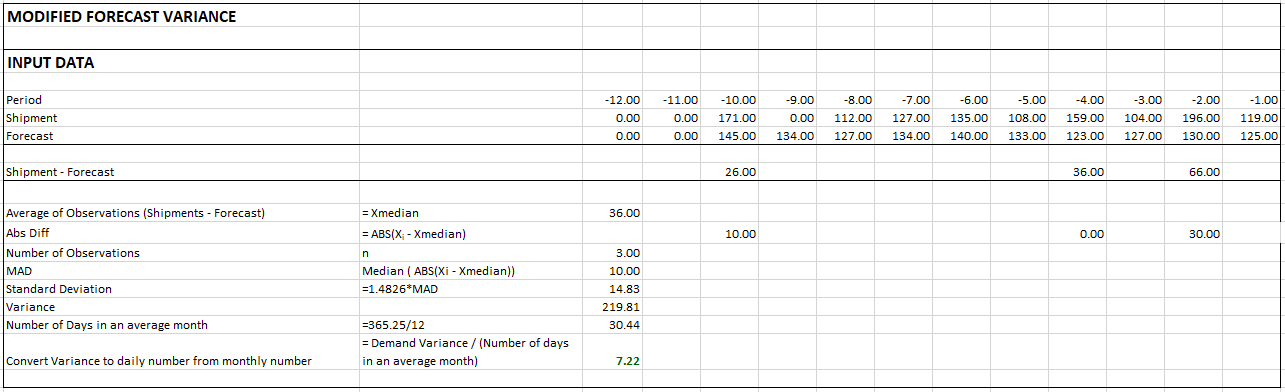
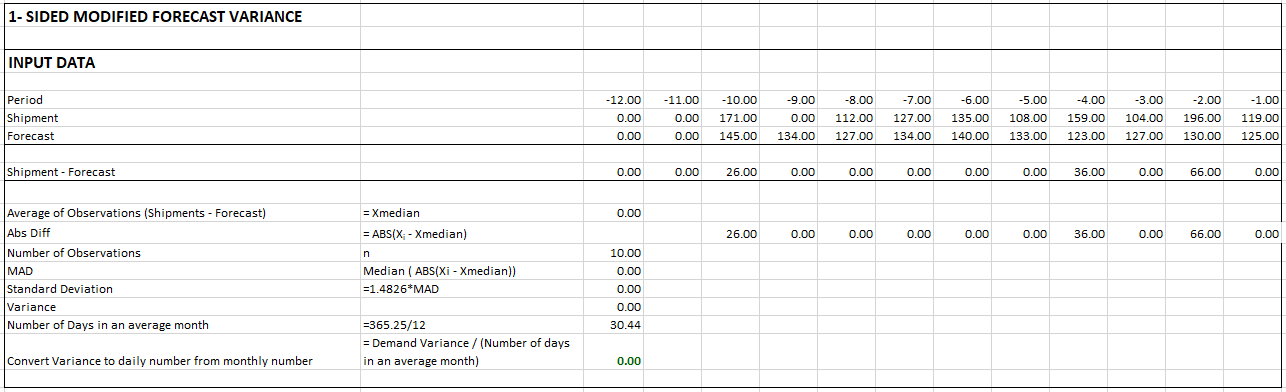
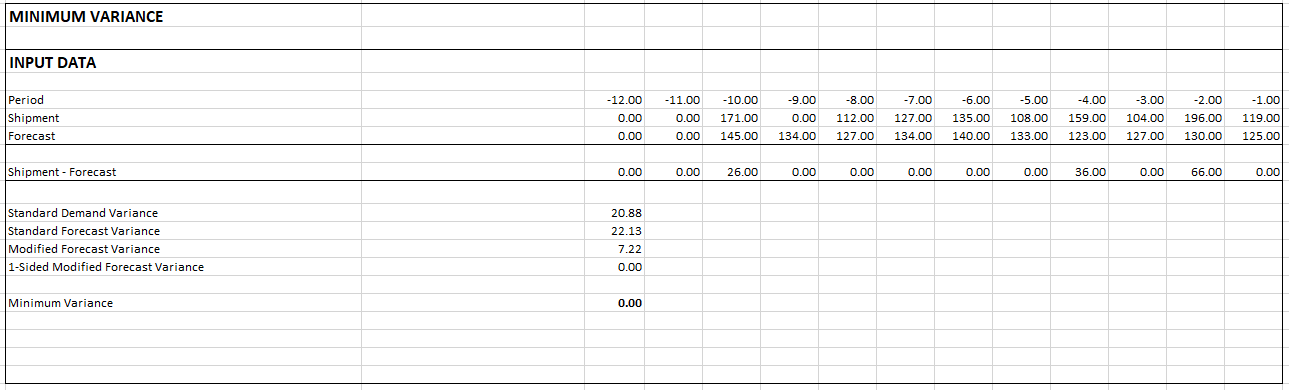
Match results in the IP document Input Data:
Variance Calculation with Lead 0 Mean plus Trim
- Trim = 10%
- Since 12 time periods, 1st and last observations are ignored
- Ignore Leading 0 combinations Defined in table : InventoryOptimizationInputDataConfig_XXXX

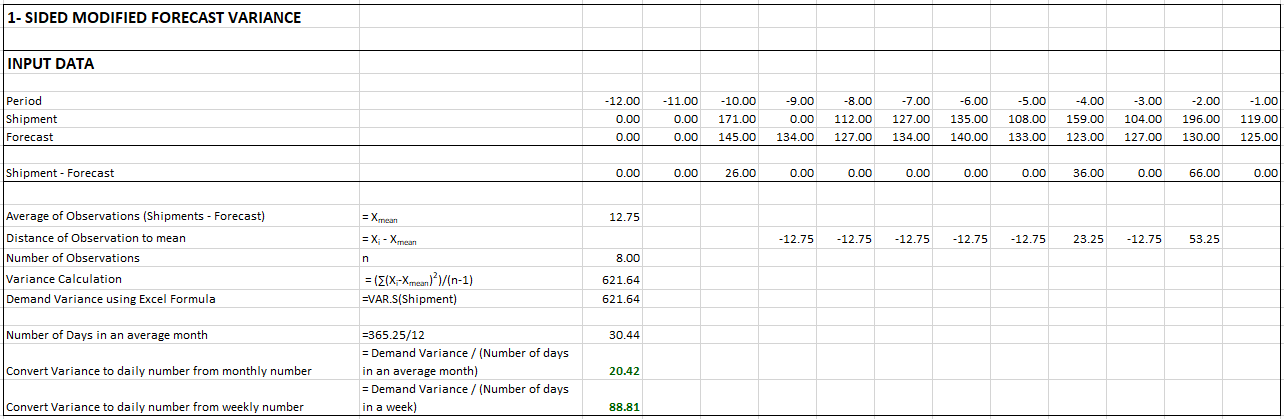
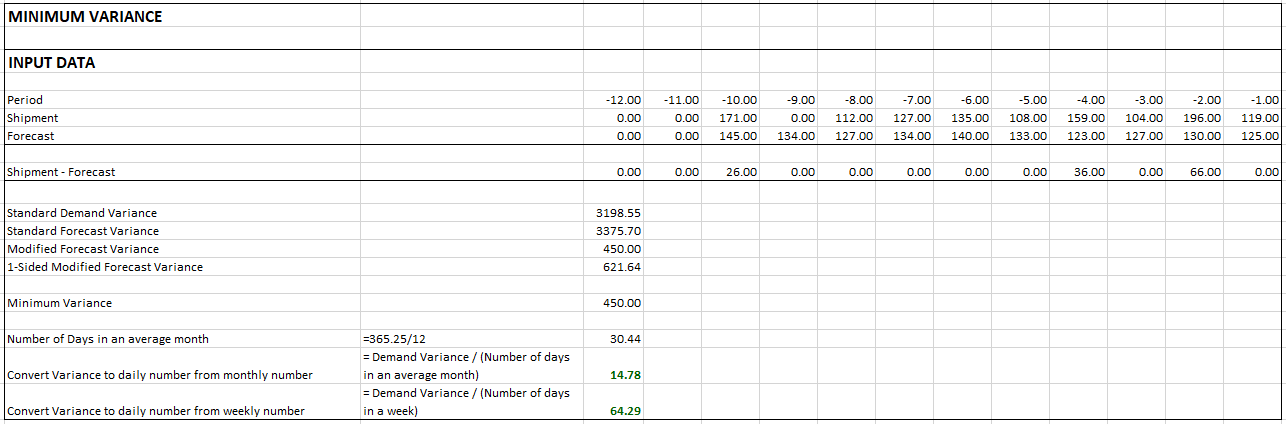
Matches results in the IP document Input Data:
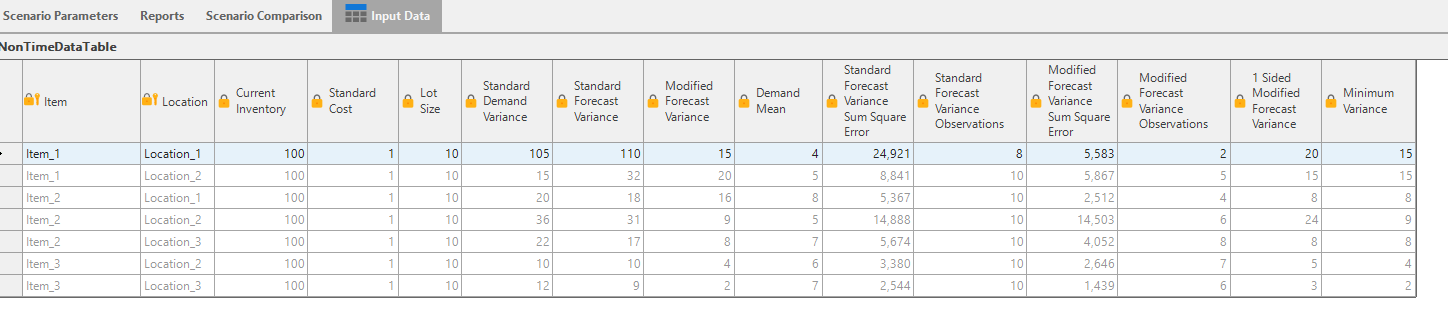
Variable Calculation with Lead 0 plus Median plus Trim
- Trim = 10%
- Since 12 time periods, 1st and last observations are ignored
- Ignore Leading 0 combinations Defined in table : InventoryOptimizationInputDataConfig_XXXX

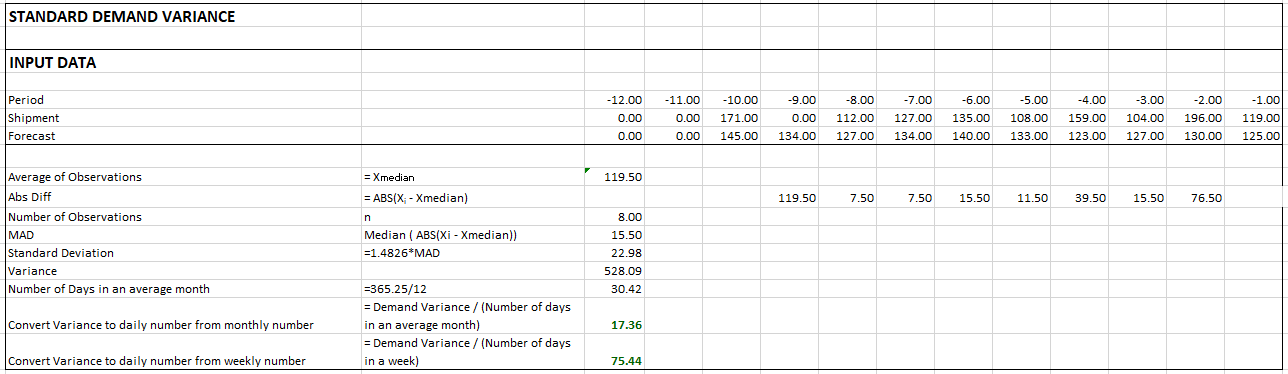
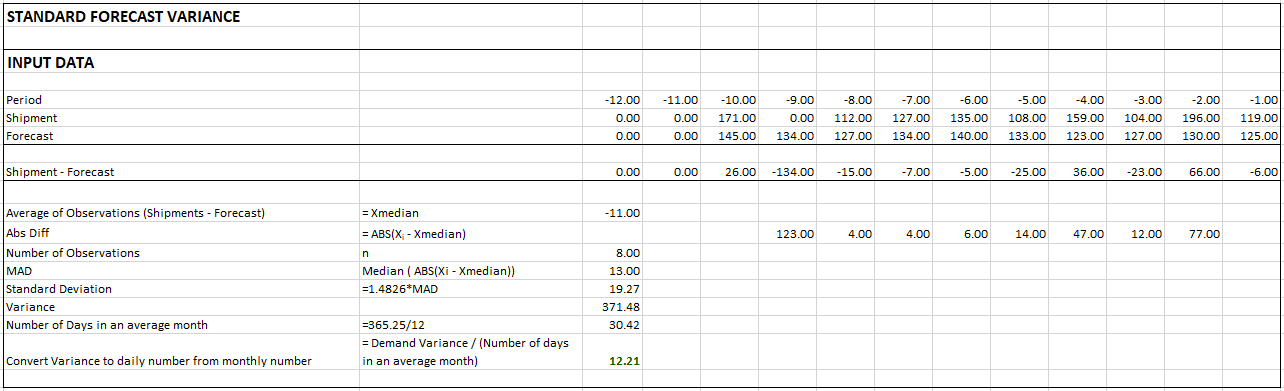
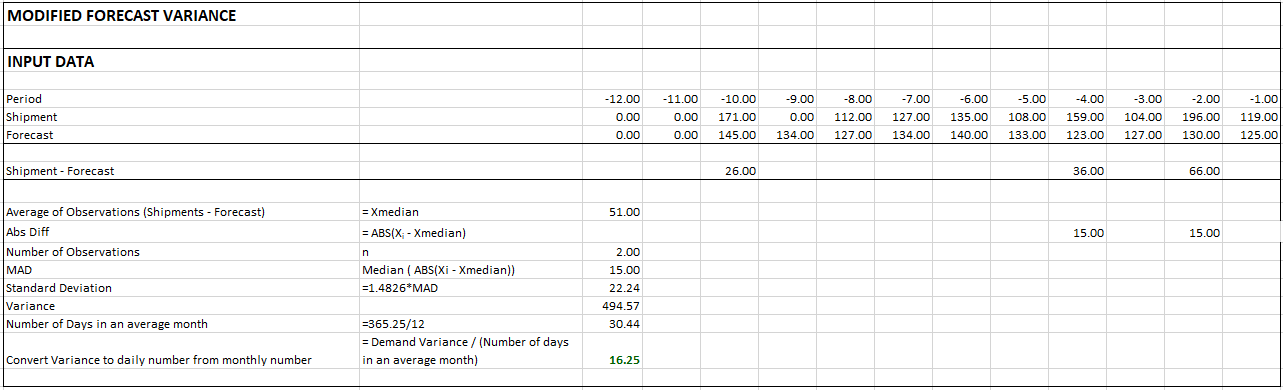
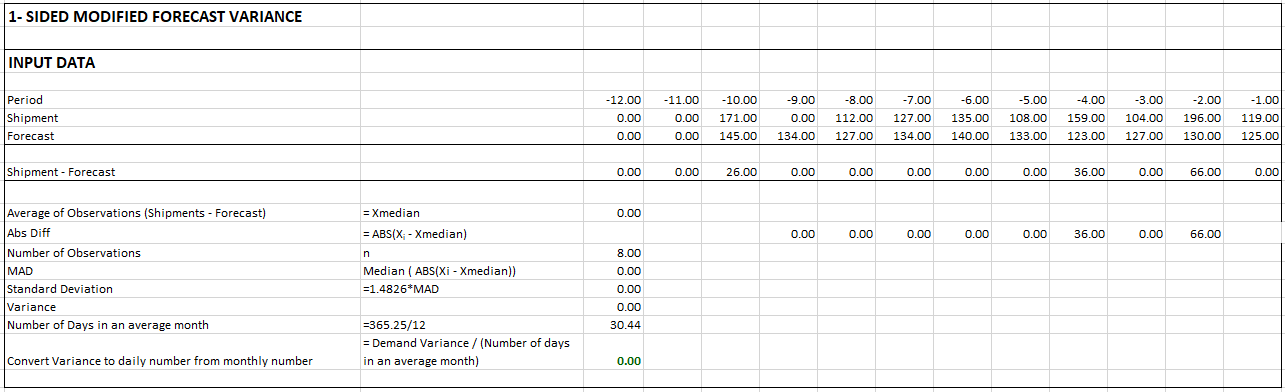
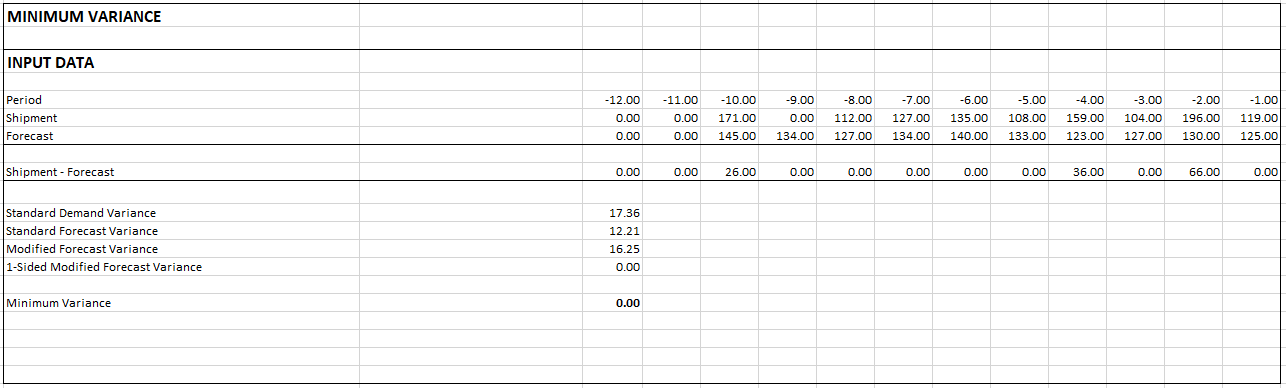
Match results in the IP document Input Data:
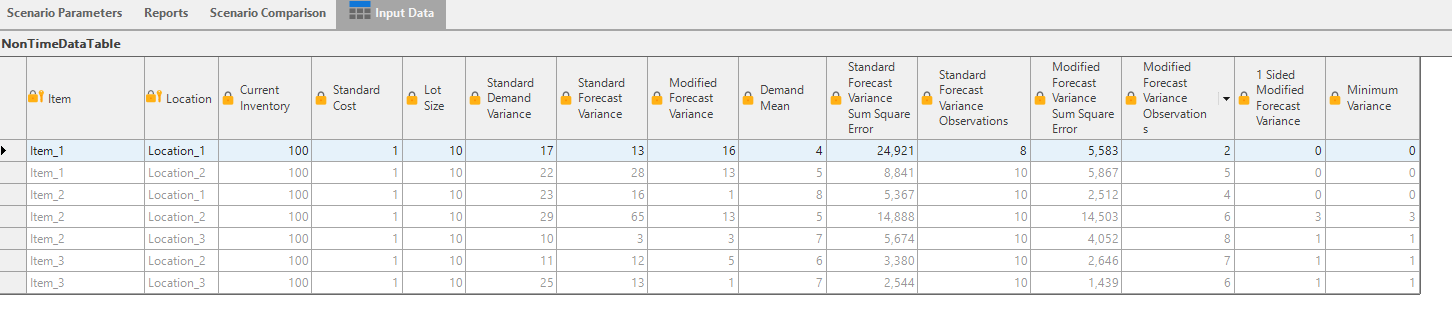
Safety Stock Variance Calculations
👍 The Inventory Planner Safety Stock Updated Variance Calculations spreadsheet can be found in your client documentation server and within the Arkieva application.
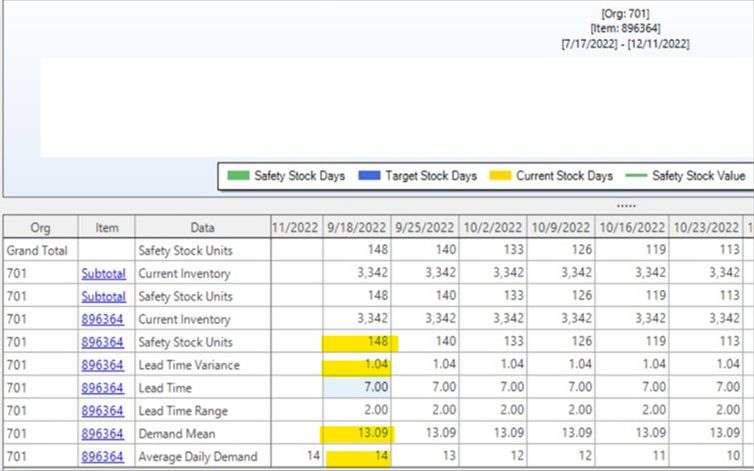
Steps for Safety Stock Validation:\ Select a Material-Plant combination in Arkieva to use for validation. Update all cells highlighted in yellow as they are user inputs needed for SS calculation. The data will be calculated based on the user input provided.
Next, to calculate the safety stock for the material plant combination you must provide input data consistent with the input data in the Arkieva IP document.
- Update the Lead time, lead time variance, service level, and lot size for the selected combination. This can be obtained from the Input data screen in the IP document.
- Input the last 12 months and forecast for the last 12 and future 12 months for the Monthly Safety Stocks shipments (history).
- Input the last 52 weeks and forecast for the last 52 and future 52 weeks for the Weekly Safety Stock Shipments (history). This can be obtained from the demand data screen in the IP document.
Once all input data is updated, the calculations for all three types of variance (demand, forecast and modified forecast) and the three Safety Stock calculation methods (P1, P2 and P4) will get updated.
Lastly, compare Safety Stock, Target Stock and Reorder point values with the results in IP document in Arkieva.
📘 Note
- Leading 0's in the Demand (Usage) quantity is ignored from the Safety Stock Calculations. Adjust Demand Mean and Variance formula to ignore Leading 0's.
- Safety Stock Calculation in Arkieva is a two step process: (a) Base Safety Stock (BSS) is calculated as KSQRT (Average Lead Time Demand Variance + SQR (Average Demand) * Standard Deviation Lead Time) Where K depends on the service level. Then, (b) it converts it into normalized safety stock (NSS) to account for the future increase or decrease in demand (via forecast). This allows the SS to be higher in periods where forecast is high and vice versa. This is why our safety stock module allows for safety stock by periods.
- Normalized Safety Stock in Arkieva is calculated as BSS * (Average Daily Demand/Demand Mean).
Monthly

Related Articles
Inventory Planner
The Arkieva Inventory Planner (IP) supports sustained inventory reductions by providing a comprehensive view of how stocks are serving customer demand. The Inventory Planner is closely linked with the Demand Planner and the Supply Planner. Reports ...Definitions
Under definitions you will provide the calculations, exception flag, and composite analysis information needed by the Segmentation component to be able to run the analysis. Calculations Click the asterisk * to create a new line. More than one ...Inventory Management
Basics of Inventory This inventory basics video will help you understand inventory management frameworks. We will help you think about inventory policies, whether something is made to stock or whether something is lean / agile, and what kind of ...Inventory Planning Introduction
Arkieva’s sophisticated analysis tools and safety stock reports enable planners to identify inventory issues and to make informed decisions concerning this delicate inventory balancing act. Our Inventory Planner utilizes demand data to plan safety ...Inventory Planning
(No content imported from ReadMe.)