Rule Based Logic for Replenishments Planning
Integrated Scheduling
Motivation
- Distribution is handled as an afterthought or contracted out
- Little or no coordination between transfers/delivery and production planning
- Cost of delivery (transport, administration, low asset utilization) can be as much as 20 to 40% of the delivered cost.

Basic Process
Single Unified Logistics Model
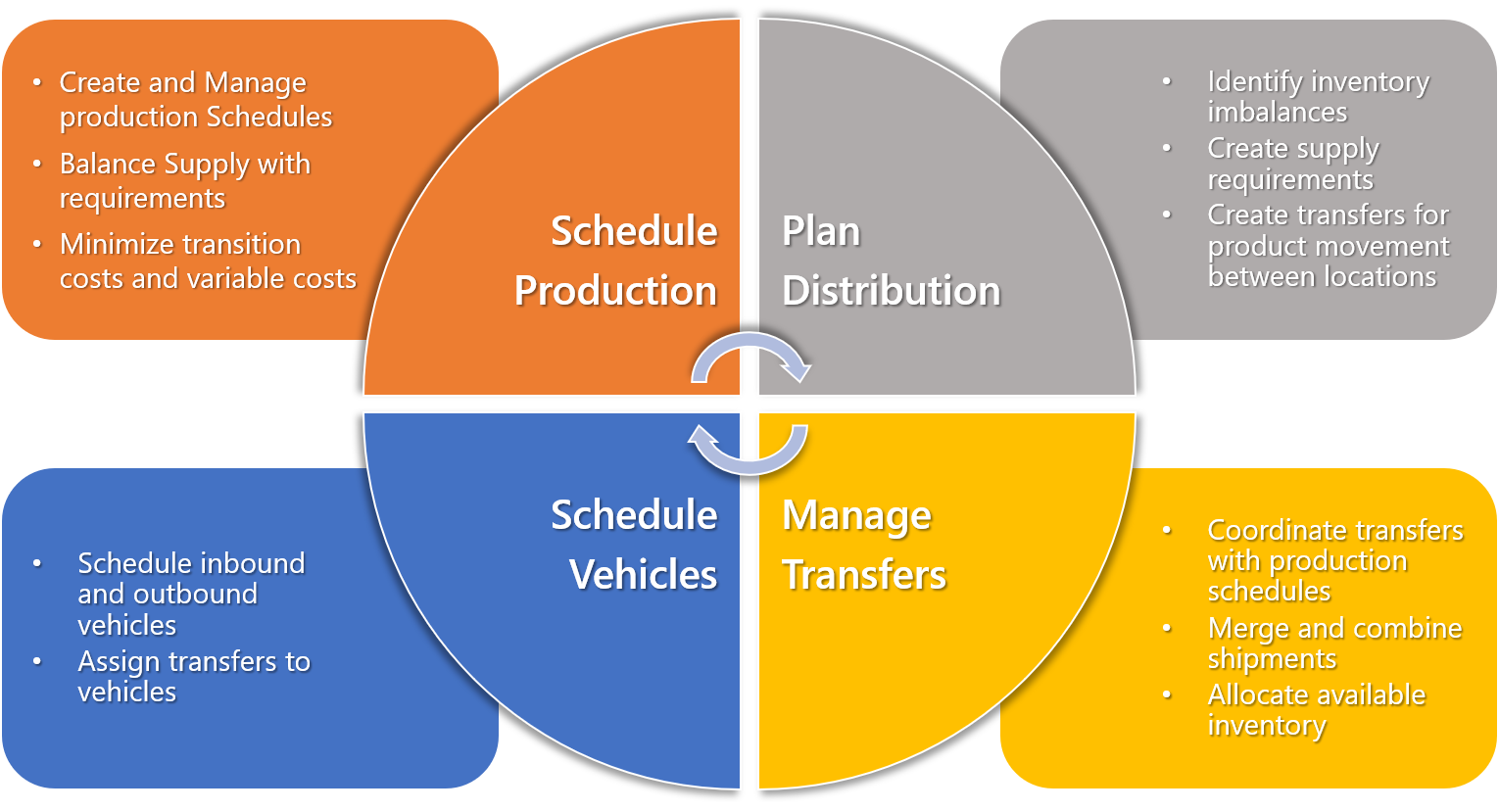
Plan Requirements
DRP
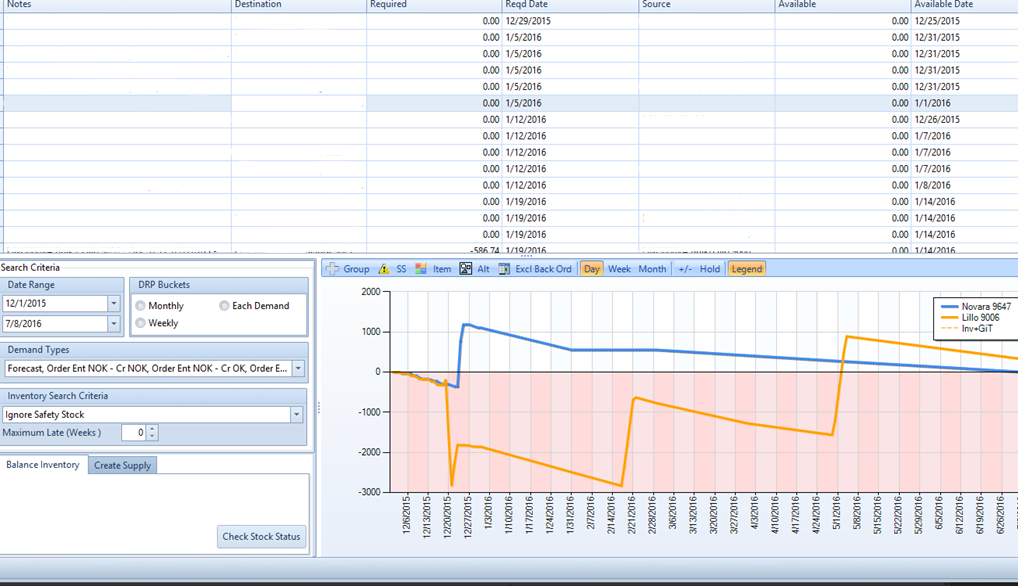
- Run DRP in weekly, monthly or one demand at a time.
- Selectively create transfers, production, or procurements.
Inventory Search
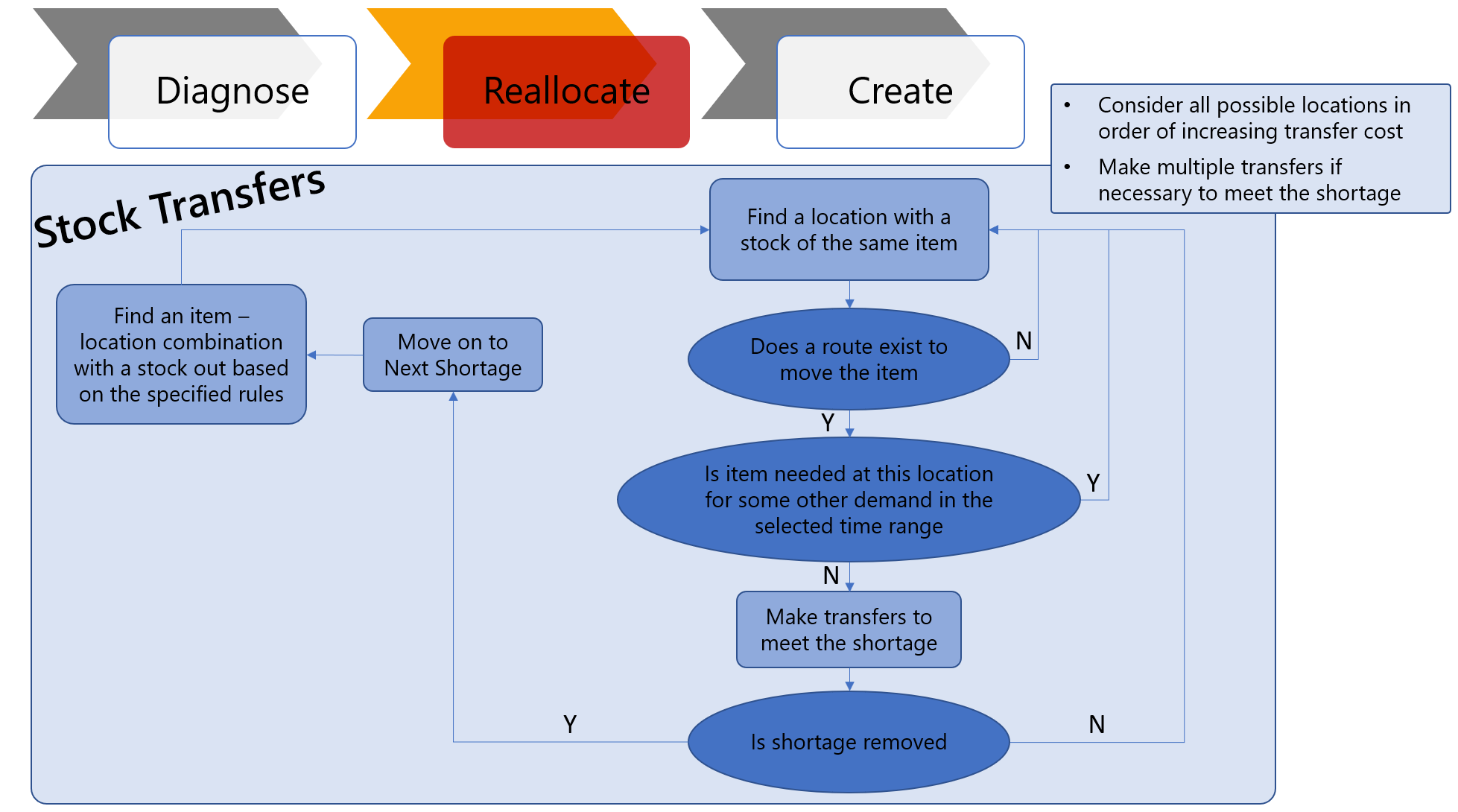
- Search for inventory at locations based on the shortest transit time.
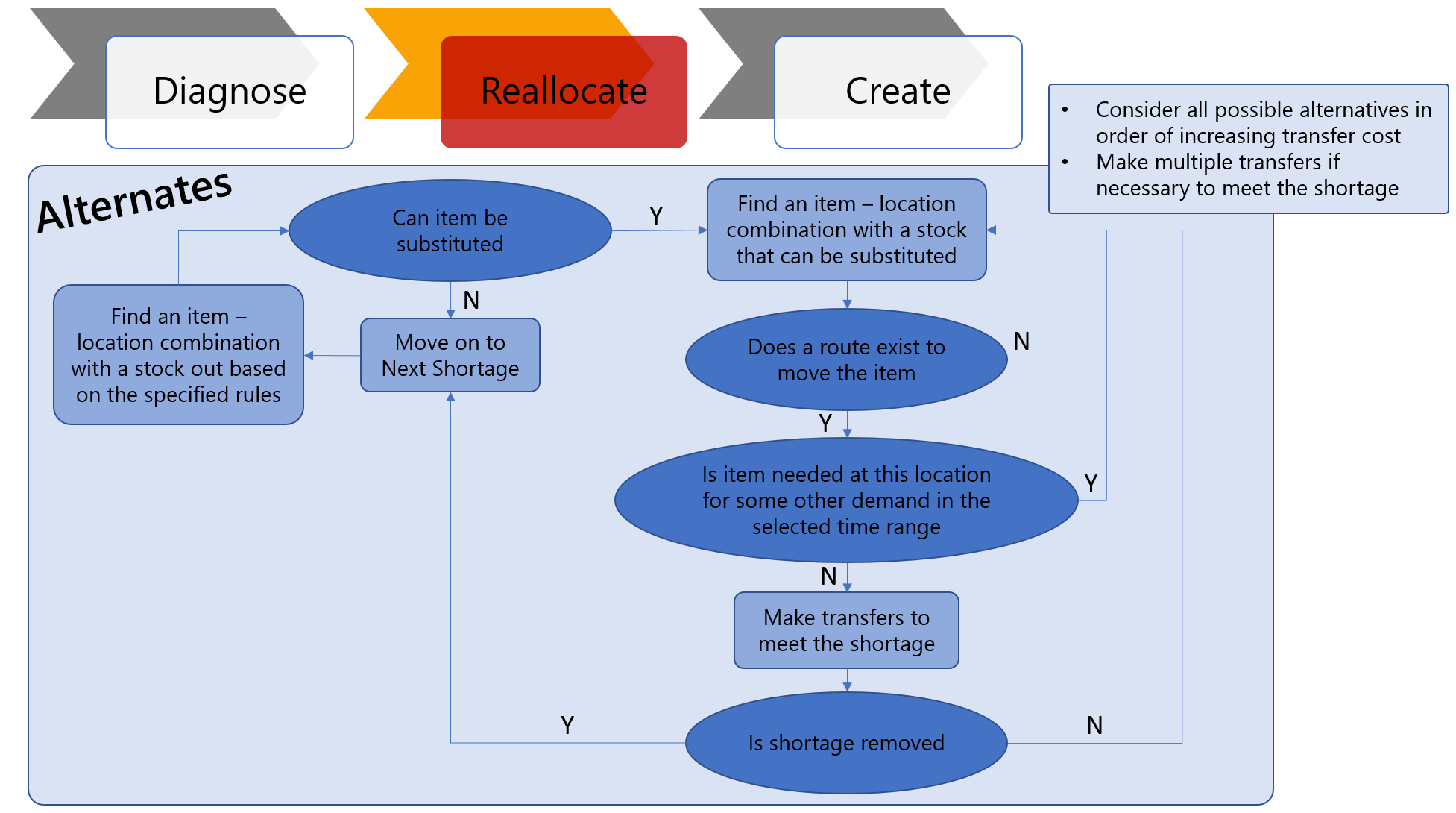
- Search for alternate products to satisfy requirements.
- Search for inventory based on routing cost and restrictions.
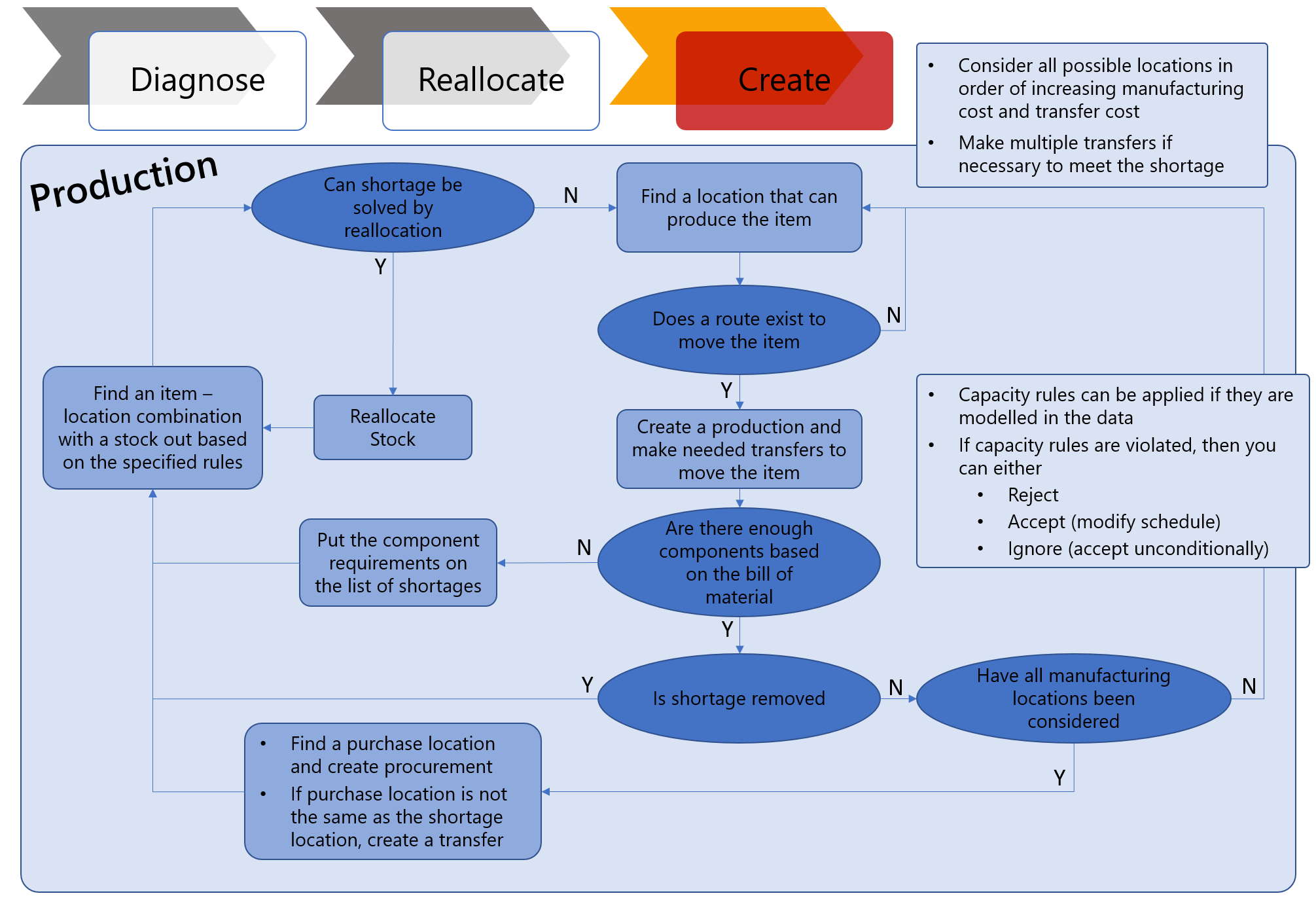
- Identify production based on variable cost + delivery cost.
Logic Overview
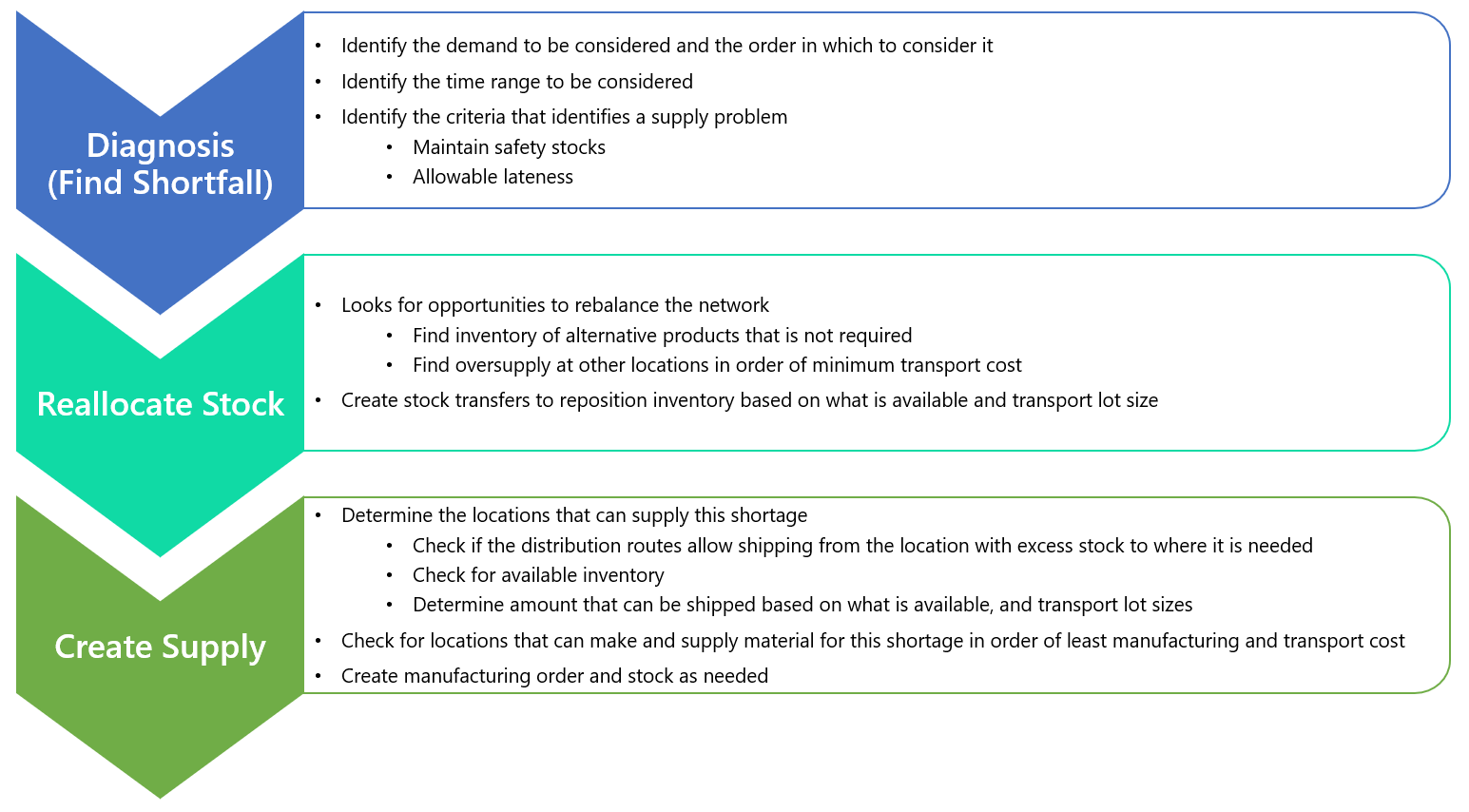
Plan Requirements Summary
DRP
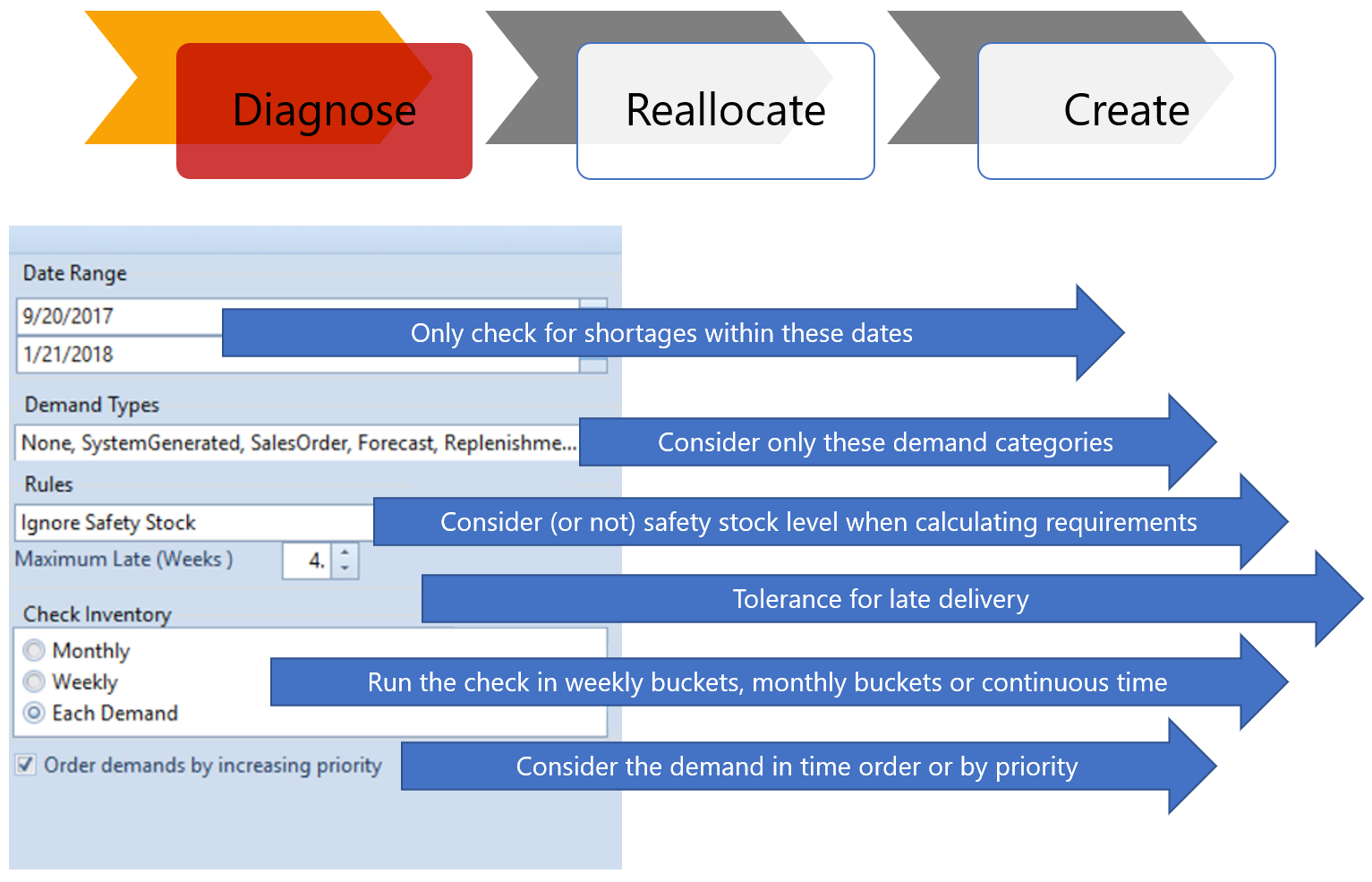
- Make a selection of items and locations
- Selection can optionally include all components and/or all products made from the items in the selection
- Select a beginning and ending date. The date range is used to limit the item location combinations that go negative in terms of inventory position within that time range.
- Select one or more demand types. Demand types include forecast, orders, confirmed orders etc. This allows the user to prioritize the DRP based on types of demand.
-
Safety stock quantities can be enforced. In addition control is provided for maximum accepted lateness.
-
Run DRP in weekly, monthly or one demand at a time
- In bucket mode, the inventory position is checked at the end of each bucket and corrective action is taken
- When running one demand at a time, each demand infeasibility is corrected either by transfers, production, or procurements. Required components are recursively examined and their inventory is corrected also.
- Selectively create transfers, production, or procurements.
- User controls the actions allowed to correct inventory imbalances. The actions include
- Create transfers (based on allowed routes). If necessary, multiple transfers are created automatically. For example if an item needs to go from location A to C, but the only routes available are from A to B and B to C, two transfers will be created: one from A to B and another from B to C.
- Transfer paths are calculated based on Dijkstra’s shortest path algorithm.
- Replenishment Lot quantities can be enforced.
- Replenishments can be restricted to entire amount needed.
- Create production. If a production is created at a location, the associated transfer is also created. Locations that are looked at can be limited by valid routes. Manufacturing lot sizes are enforced
- Procurements are made only for products that cannot be manufactured. That is, the item has no appropriate manufacturing method
-
Optionally, alternate (substitute) products can be considered as candidates.
-
Full Undo and Redo capability. The DRP action can be reversed completely, or individual replenishments can be removed
Manage Transfers
Transfers
- Coordinate existing transfers with available inventory
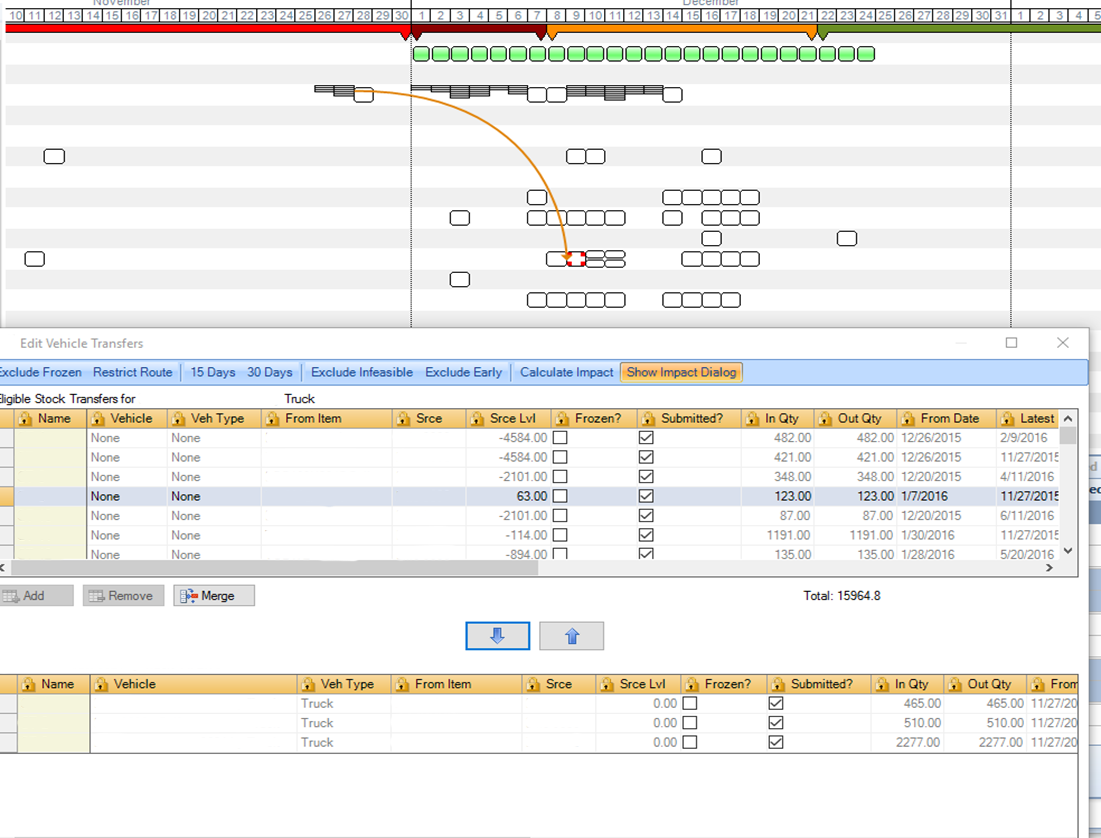
- Add, delete, modify, merge transfers.
- Re-route transfers.
Vehicles
- Assign transfers to vehicles
- Combine and consolidate transfers based on vehicle capability (truck volume, barge volume etc.)
- Identify the impact of modifying transfers
Related Articles
Inventory Planning Introduction
Arkieva’s sophisticated analysis tools and safety stock reports enable planners to identify inventory issues and to make informed decisions concerning this delicate inventory balancing act. Our Inventory Planner utilizes demand data to plan safety ...Supply Planning
One of the most critical tasks for any manufacturing organization is balancing assets (e.g., capacity, materials, people) with demand. Planners must determine how best to meet the demand given (1) available assets, (2) the production and distribution ...Promotion Planning
Introduction Running promotions to increase sales is an essential part of the product marketing process. The Arkieva Promotions Planner provides powerful forecasting analytics tools that help you quickly align your promotions with your demand or ...Supply Planning Introduction
One of the most critical tasks for any manufacturing organization is balancing assets (e.g., capacity, materials, people) with demand. Planners must determine how best to meet the demand given (1) available assets, (2) the production and distribution ...Demand Planning Introduction
The Demand Planner creates a collaborative demand planning process for a cross-functional demand planning process for working towards one common goal. Benefits of the Arkieva Demand Planner Solution: 15% less inventory 17% higher perfect order ...